Electric Flat Transfer Cart Solutions
Application Overview
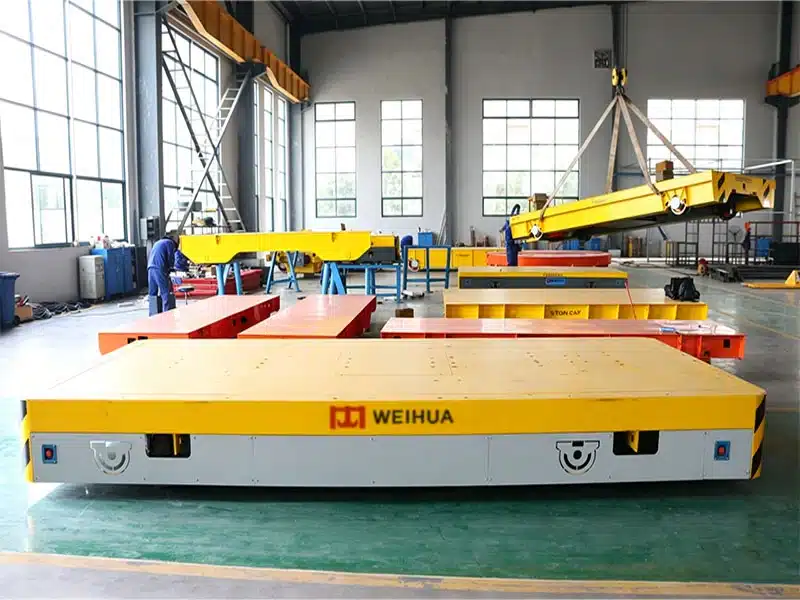
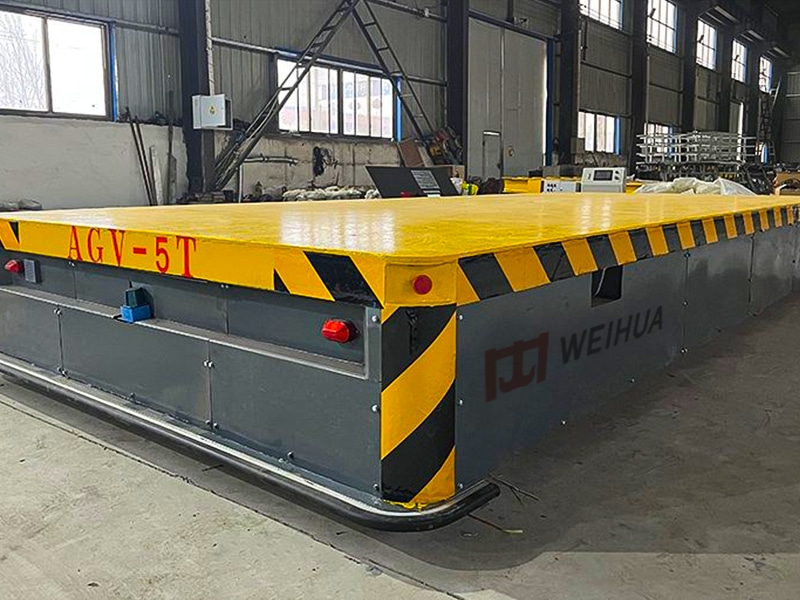
Electric flat transfer carts provide an efficient solution for internal material transportation. Manufacturers use them to move raw materials, semi-finished products, finished goods, and heavy equipment across production facilities
Compared with forklifts and towing vehicles, electric flat transfer carts offer higher load capacity, smoother travel, and greater route flexibility. Therefore, they are well suited for heavy-duty, high-frequency, and long-distance transportation tasks.
Many modern factories need faster material flow between workshops, warehouses, and installation areas. Electric flat transfer carts help connect these locations and keep production moving efficiently. At the same time, they reduce manual handling and improve workplace safety.
Manufacturers can also choose different power supply options based on operating conditions. Common solutions include battery-powered systems, cable drum power systems, and low-voltage rail-powered systems.
Key Benefits
High Load Capacity
Smooth and Stable Operation
Flexible Transportation Solution
Improved Work Efficiency
Custom Design Options
Material transfer in factory workshop
Machining shops, equipment manufacturing facilities, and assembly workshops move materials throughout the day. Workers often transfer raw materials, parts, and semi-finished products between production stages.
Large factories usually cover extensive areas. In addition, many materials have substantial weight. Electric flat transfer carts travel between workstations and maintain a steady material flow.
For example, operators can move large castings from rough machining areas directly to finishing sections. As a result, production delays decrease and workflow remains continuous.Assembly line facilities also benefit from these carts. They integrate easily with internal logistics systems and support stable material transportation throughout the workshop.
Heavy industry / Steel structure manufacturing plant area
Heavy industry facilities regularly transport oversized and overweight components. Steel beams, box columns, bridge sections, and welded structures often require movement between production stages.
Traditional transportation equipment may struggle with these large components. Therefore, many manufacturers rely on electric flat transfer carts for daily operations.
The large platform supports heavy loads and keeps components stable during transportation. In addition, custom platform dimensions accommodate different product sizes.
Manufacturers also use these carts for finished product handling. After inspection, workers can move large structures directly to loading areas. As a result, factory logistics become more efficient.
Precast component/Building material factory area
Precast concrete plants produce wall panels, floor slabs, beams, and stair units. These products carry significant weight and require careful handling.
Transportation instability can damage products and increase rework costs. Therefore, stable material movement remains essential throughout the production process.
Electric flat transfer carts provide reliable support during transportation. After demolding, operators can move components directly to curing areas, storage yards, or loading zones.
Meanwhile, large building material plants often run multiple production lines at the same time. Electric flat transfer carts connect these areas and keep materials moving efficiently. As a result, manufacturers improve overall production performance.
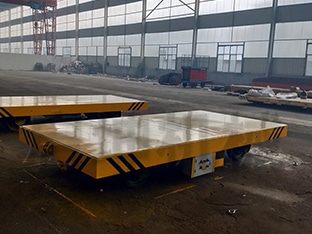
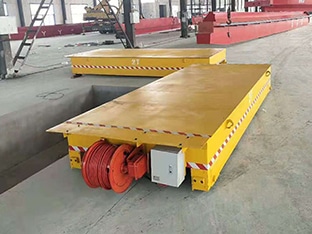
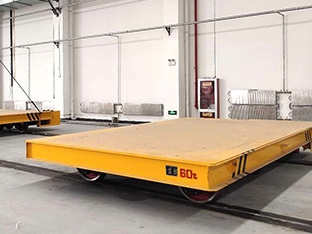
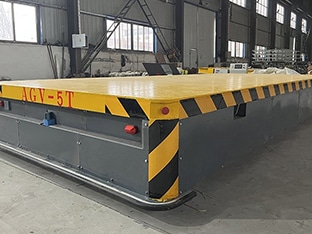
Heavy-duty moving of factory buildings and warehouses
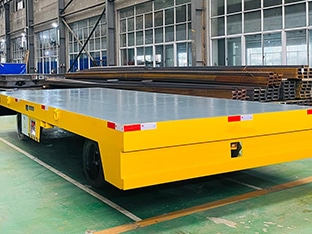
Warehouses frequently handle heavy equipment, steel coils, molds, industrial racks, and bulk products.Forklifts may face load limitations when transporting extremely heavy cargo. Furthermore, continuous forklift operation can increase maintenance costs.
Electric flat transfer carts establish dedicated transportation routes between warehouses and production areas. Therefore, workers can move heavy goods more efficiently.Many automated storage facilities also use these carts for material replenishment. Raw materials move directly to designated workstations, which reduces manual handling and improves logistics efficiency.
As a result, companies increase material turnover speed and lower internal transportation costs.
Equipment maintenance and relocation
Industrial facilities regularly relocate equipment during installation, maintenance, and production upgrades.Large machinery, metallurgical equipment, pressure vessels, and power generation systems often require movement between operating areas and maintenance zones.Electric flat transfer carts provide a practical solution for these transportation tasks. Manufacturers can customize the platform according to equipment dimensions and load requirements.
During relocation projects, operators combine lifting equipment with transfer carts to complete the movement process. After lifting the equipment onto the cart, they transport it safely to the target location.This approach reduces repeated lifting operations and improves site safety. Therefore, electric flat transfer carts have become an important part of equipment maintenance logistics in many industrial plants.