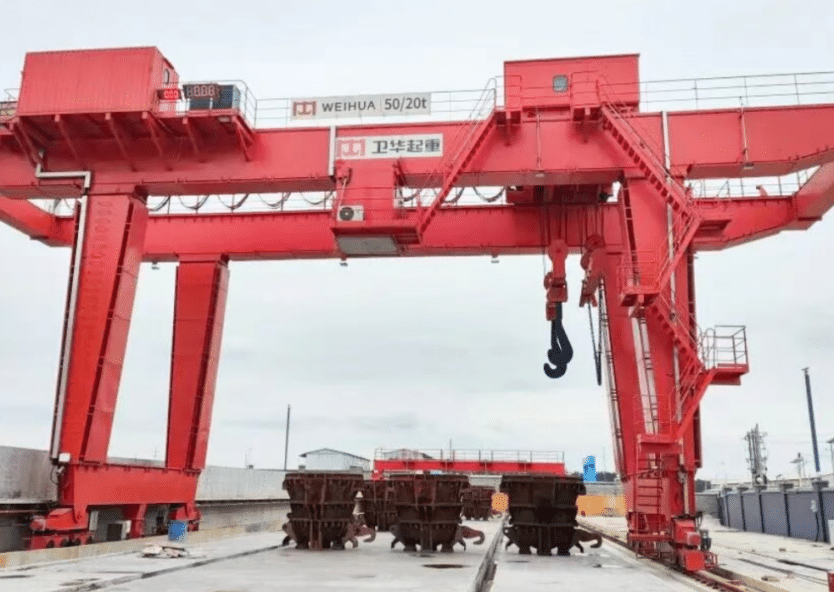
Nowadays, the inability of old equipment to meet the constantly expanding demand for production capacity is one of the significant factors affecting the development of modern enterprises. However, the application of overhead cranes can effectively solve this problem. This is because overhead cranes not only can lift materials more efficiently, but also can enhance the safety and space utilization of the workshop.
Over the years, Weihua has provided overhead cranes for multiple heavy industries. The following will show you how the customized lifting scheme meets the daily production of the enterprise according to the real case.
Introduction to the Project
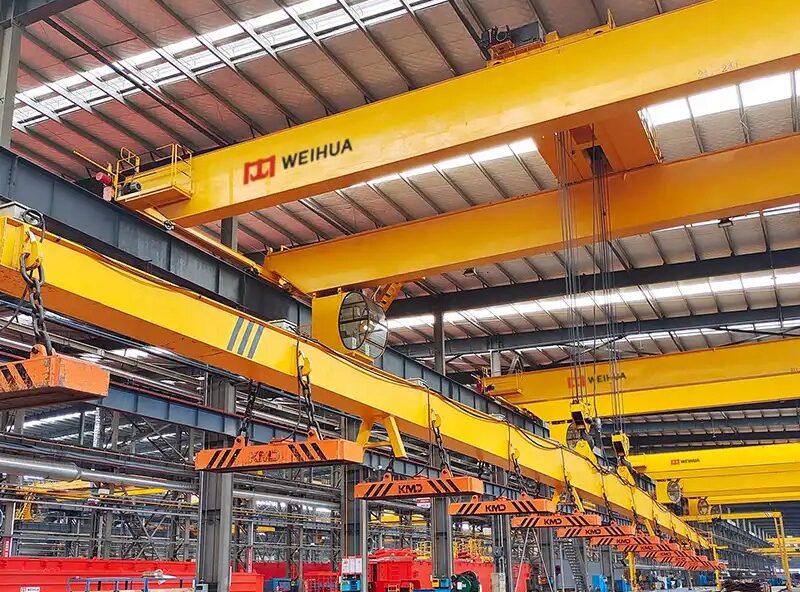
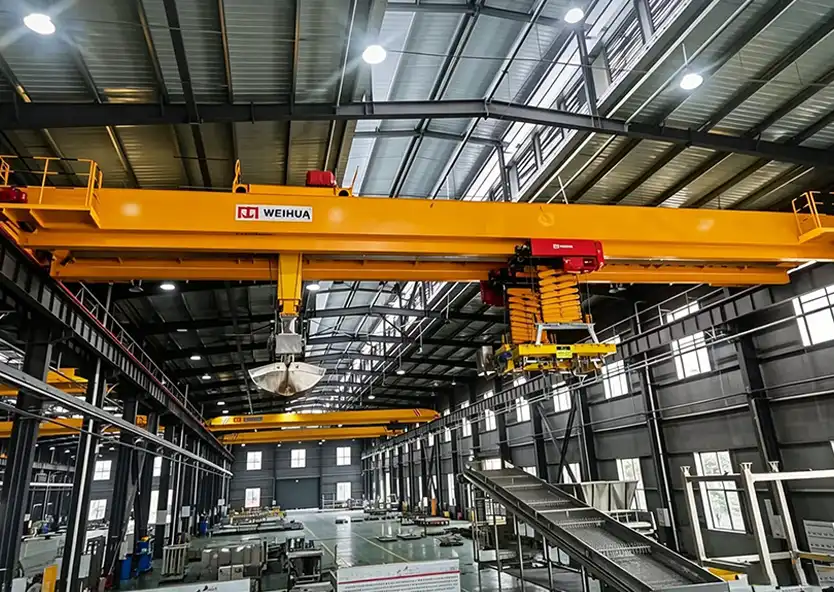
Recently, Weihua delivered an overhead crane to an industrial manufacturing plant and put it into daily operation. The customer needed a more efficient way to move materials and wanted to create a safer and better-organized production environment.
The factory mainly produces steel structures and mechanical parts. Every day, workers move heavy materials between different production lines. As production increased, the old handling method could no longer support the growing workload. Therefore, the customer chose a Weihua overhead crane to upgrade the workshop.
Before providing the solution, Weihua engineers carefully checked the workshop layout, lifting frequency, and material handling requirements. Based on these conditions, the team developed a crane system suitable for continuous industrial operation. Today, the crane runs smoothly and helps the factory move materials faster while reducing manual work.
Industrial Lifting Challenges
Material Flow Became More Complex
As production expanded, the factory needed to move more materials every day. Steel components, mechanical parts, and finished products travelled constantly between different work areas. However, the old handling method could no longer keep up with this growing demand.
At busy times, workers spent more time moving materials from one station to another. The increasing amount of floor traffic also affected the efficiency of daily operations and reduced the available working space.
Need for a More Efficient Solution
The factory wanted to simplify the material handling process and create a smoother workflow. Therefore, the customer started looking for an overhead crane that could transport materials quickly while keeping the production area organized.
After reviewing the workshop conditions and production requirements, Weihua proposed a lifting solution that matched the customer’s actual needs and future production plans.
Benefits After Crane Installation
Production Became More Efficient
The factory now moves materials between different workstations more quickly. Workers spend less time waiting for materials, and production flows more smoothly throughout the workshop.
Workshop Space Is Used More Effectively
The overhead crane lifts and transports materials above the production area. As a result, the workshop floor remains clear, giving workers more operating space and making material movement easier to manage.
Stable Operation Supports Daily Production
The crane operates smoothly every day and helps the factory maintain continuous production. In addition, reliable lifting performance reduces interruptions and supports long-term production efficiency.
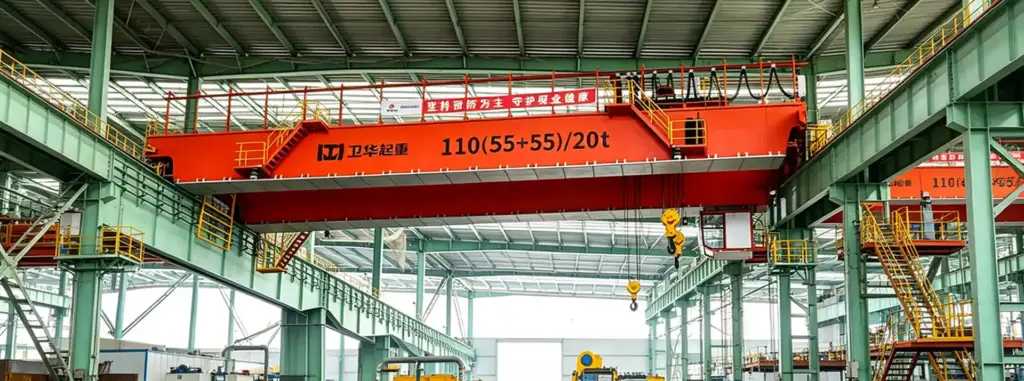
Why Industrial Customers Choose Weihua
When choosing lifting equipment, industrial customers often pay attention to safety, reliability, and whether the solution fits their actual needs. Weihua understands these concerns and focuses on providing practical lifting solutions for different industries.
Over the years, Weihua has supplied cranes for machinery manufacturing, steel processing, automotive production, and many other industrial fields. The company starts each project by understanding how the customer works and what challenges they face.
Instead of offering the same solution to every customer, Weihua designs overhead crane systems according to real working conditions. This approach has helped the company build long-term cooperation with customers in many countries. In addition, customers appreciate the support they receive throughout the project, including solution design, installation guidance, and after-sales service.
Frequently Asked Questions
1. In which industries are overhead cranes most commonly used?
Overhead cranes are used in a wide range of industries where materials need to be lifted and transported on a regular basis. You can often find them in machinery manufacturing plants, steel fabrication workshops, automotive factories, warehouses, and equipment assembly lines. Different industries may have different lifting requirements, so the crane design is usually selected according to the actual application.
2. Why do many factories choose overhead cranes instead of floor transportation equipment?
Many factories prefer overhead cranes because they make better use of the available workshop space. Since the crane operates above the production area, materials can be moved without affecting normal floor traffic. This helps keep the workshop organized and allows production and material handling to take place at the same time.
3. How do I choose between a single girder and a double girder overhead crane?
There is no single answer because every project is different. Generally speaking, a single girder overhead crane is suitable for light and medium-duty lifting tasks and is often chosen for its compact structure. A double girder overhead crane, however, is better suited for larger lifting capacities, longer spans, or applications that require frequent operation. The final choice usually depends on the actual working conditions and lifting requirements.
4. Can an overhead crane be customized for different workshops?
Yes. In most cases, overhead cranes are designed according to the customer’s workshop dimensions and production needs. Engineers will consider factors such as span, lifting height, material handling frequency, and the layout of the production area before recommending a suitable solution.
5. What improvements can a factory expect after installing an overhead crane?
For many manufacturers, one of the biggest changes is a smoother material handling process. Heavy materials can be moved more quickly between different workstations, which helps reduce unnecessary waiting time during production. At the same time, the workshop floor becomes less crowded, making daily operations more efficient and easier to manage.