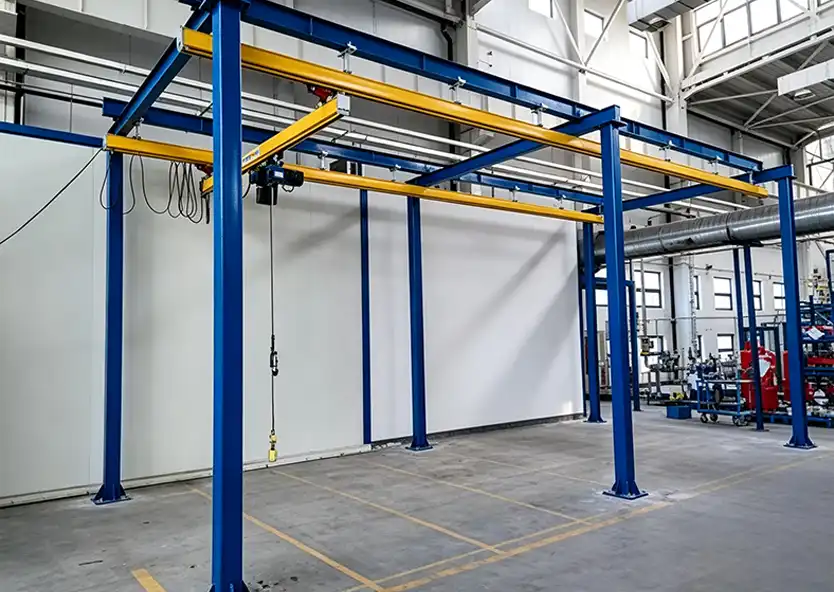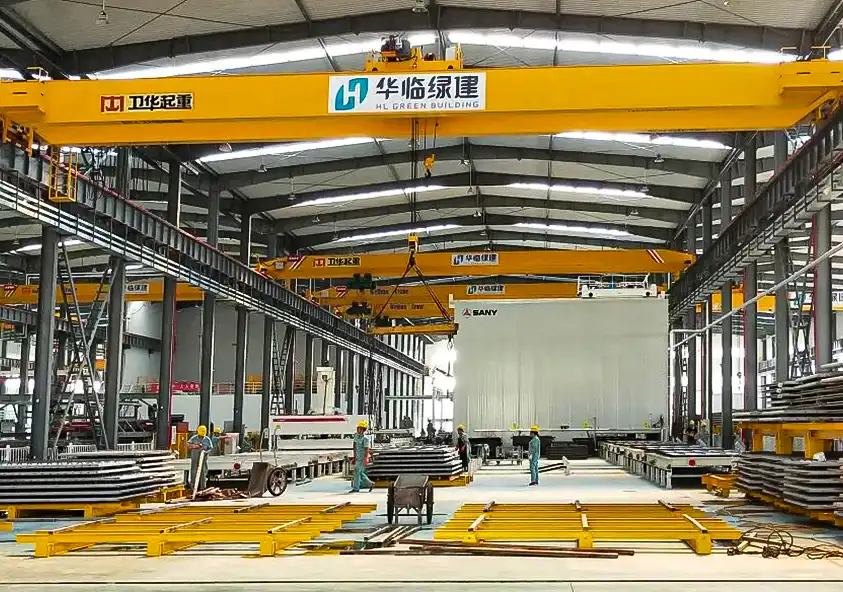
Manufacturing companies now expect higher production efficiency and safer material handling. Because of this, workshops continue to upgrade their lifting equipment and handling methods. Overhead cranes have become a common choice in many factories. They offer stable operation, high lifting capacity, and a wide range of applications.
Today, manufacturers use overhead cranes in machinery production, steel processing, automotive plants, warehousing and logistics, and energy equipment manufacturing. However, each production environment has different requirements. Some workshops need greater lifting capacity, while others focus more on operating accuracy. In addition, many companies want to reduce maintenance costs over the long term. Therefore, more manufacturers now prefer customized overhead crane solutions designed around actual working conditions.
Growing Demand for Customized Workshop Overhead Cranes
Today, workshops in different industries operate in different ways. Because of this, companies have different requirements for overhead cranes. Lifting capacity, span, lifting height, and control methods all depend on the actual working environment.
Workshop Requirements Vary by Industry
Machining workshops usually pay more attention to stable lifting and accurate positioning. Operators need smooth crane movement during daily work, especially when handling precision parts and machinery.
Steel structure plants and heavy manufacturing workshops face larger lifting tasks. In these workshops, cranes often run for long hours and handle heavy loads repeatedly. Therefore, companies place greater importance on crane duty class and structural strength.
Warehouses and logistics centers focus on another important issue: space utilization. Many companies prefer compact crane structures because they save floor space and make material transportation easier. At the same time, the crane still needs to provide reliable lifting performance.
Why More Companies Choose Customized Cranes
Production methods vary from one industry to another. As a result, standard crane configurations cannot always meet every project’s requirements.
More companies now choose customized overhead crane solutions based on workshop layout, production process, and lifting tasks. In this way, the crane can fit the working environment more closely and support daily production more efficiently.
Customized lifting solutions help companies improve:
- Lifting efficiency
- Available headroom
- Operating safety
- Energy consumption
- Maintenance convenience
- Future production expansion
In addition, companies do not need to invest in oversized equipment. Instead, they can choose crane systems that match their production plans and long-term development goals.
5–50 Ton Overhead Cranes for Various Workshop Applications
Overhead cranes with lifting capacities from 5 tons to 50 tons serve many types of industrial workshops. Since production requirements vary, companies often select crane configurations according to lifting loads, operating frequency, and workshop layout.
Mechanical Manufacturing Workshops
Mechanical manufacturing plants handle machine parts, steel plates, castings, and complete equipment every day. During assembly, stable operation and accurate positioning help improve production efficiency. Therefore, overhead cranes help workers complete lifting tasks more efficiently and reduce the risks of manual handling.
Steel Fabrication and Heavy Manufacturing Workshops
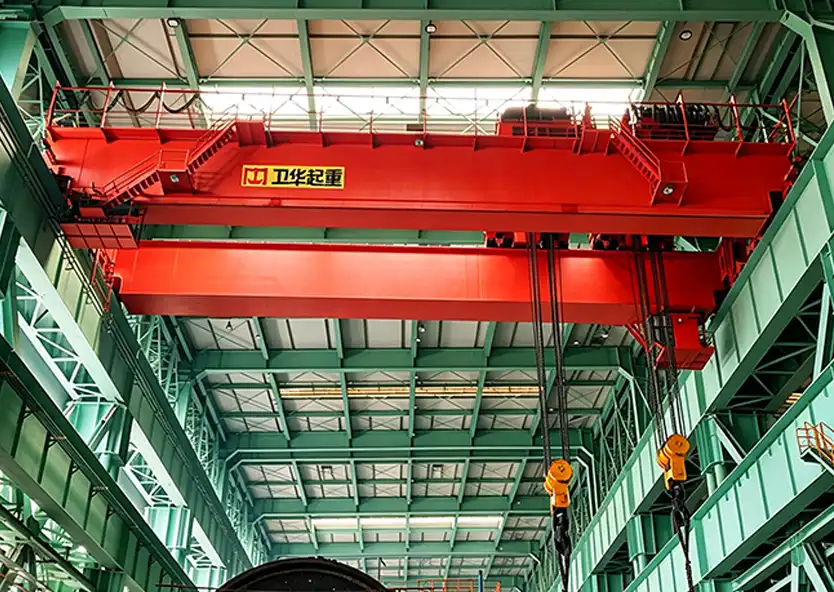
Steel beams, welded structures, and large fabricated components are often heavy and require repeated lifting. Because of this, these workshops need cranes with higher lifting capacity and stronger structural performance. Many steel fabricators choose double girder overhead cranes because they provide stable operation and reliable lifting performance.
Automotive Manufacturing Plants
Automotive production requires the movement of molds, engines, and large components between different workstations. Therefore, lifting equipment must operate reliably and transport materials efficiently. Overhead cranes help maintain production continuity and improve material handling throughout the manufacturing process.
Equipment Repair Workshops
Repair workshops handle equipment with different sizes and weights. Some projects involve large motors, while others require lifting gearboxes or complete assemblies. Because of this, companies often prefer flexible lifting solutions. Overhead cranes simplify equipment disassembly, maintenance, and reinstallation. At the same time, they help improve working efficiency and workplace safety.
Warehouses and Logistics Centers
Today, many warehouses and logistics centers use overhead cranes to move pallets, machinery, and oversized cargo. Besides improving material flow, these cranes also reduce dependence on forklifts. Since the crane operates above the working area, companies can make better use of available floor space.
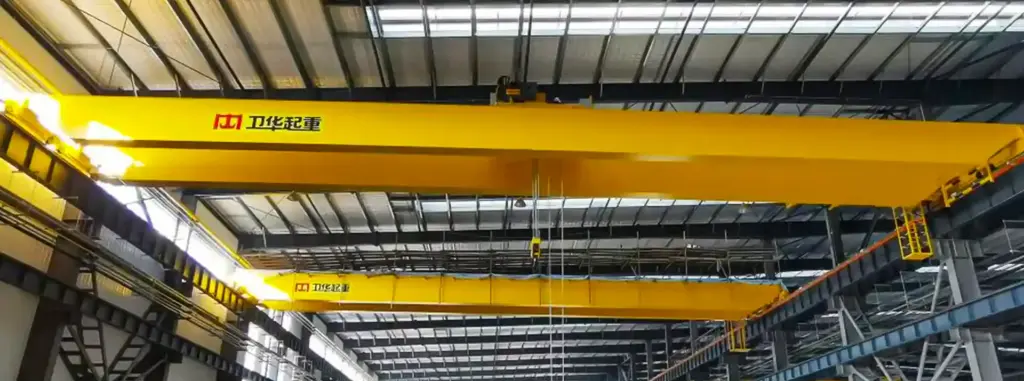
Intelligent Technology Improves Workshop Lifting Efficiency
Many industrial companies now pay more attention to intelligent lifting systems. They expect higher efficiency, stable operation, and easier maintenance.
Because of these needs, more manufacturers introduce technologies such as variable frequency control, remote monitoring, and intelligent control systems into modern overhead cranes. As a result, operators can monitor equipment status more easily and improve lifting accuracy. In addition, intelligent systems help reduce downtime and lower maintenance costs.
Supporting Global Industrial Projects
Manufacturers across Asia, Europe, the Middle East, South America, and Africa choose Weihua workshop overhead cranes for different lifting projects.
However, lifting requirements vary from one region to another. For example, humid environments often require anti-corrosion protection. Heavy-duty operations may need cranes that run continuously for long periods. In addition, some projects require electrical systems that match local power standards.
Therefore, Weihua provides customized engineering support throughout the entire process, including design, manufacturing, installation guidance, and after-sales service. In this way, customers can choose lifting equipment that matches their actual working conditions more effectively.
Frequently Asked Questions
1. In which industries are 5–50 ton overhead cranes usually used?
These cranes are common in mechanical processing, steel fabrication, automotive manufacturing, warehousing and logistics, power equipment production, and other heavy industrial workshops.
2. How do you choose between a single girder and a double girder overhead crane?
Single girder overhead cranes are suitable for light to medium lifting applications and offer good cost performance. In contrast, double girder overhead cranes provide higher lifting capacity, better stability, and larger spans. Therefore, they are more suitable for heavy-duty applications.
3. Can the span and lifting height be customized?
Yes. Manufacturers can customize the span, lifting height, control method, working class, and electrical configuration according to workshop layout and lifting requirements.
4. What safety devices are included?
Standard safety features include overload protection, emergency stop buttons, travel limit switches, end buffers, braking systems, and phase protection devices. These systems help ensure safe and reliable crane operation.