Manufacturing Is Evolving Faster Than Ever
Manufacturing today is very different from what it was a decade ago. Today, automation is present in almost every modern plant, production schedules are tighter than ever, and customers expect more product variations without compromising quality or safety. As a result, material handling has become a core part of manufacturing efficiency rather than simply a supporting function.
Because of these changes, manufacturers now expect much more from an electric hoist. Lifting capacity is still essential; however, reliable operation, minimal downtime, and compatibility with automated production systems have become equally important. In other words, the hoist must function as part of the production process instead of operating as an isolated piece of equipment.
For this reason, European-style hoists have become increasingly common in automotive manufacturing, steel processing, logistics, aerospace, and precision engineering. Their popularity reflects real operational requirements rather than temporary market trends.
Why a Compact Design Matters More Than Ever
Factory space is expensive, particularly in existing facilities where expansion is difficult. Therefore, making better use of available space has become a priority for many manufacturers.
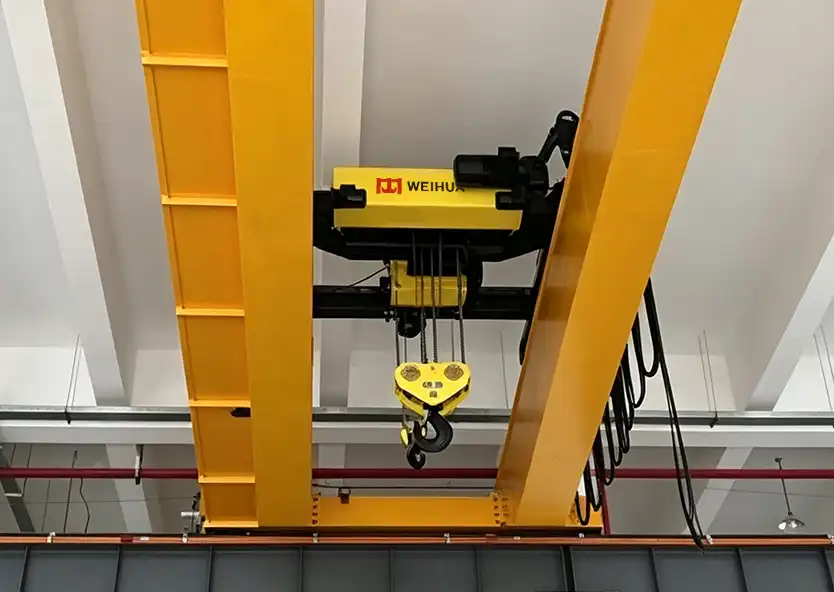
European-style hoists offer a compact design that requires less headroom and side clearance while maintaining the same lifting capacity. Consequently, operators can often achieve greater lifting height without modifying the building structure.
In addition, the lighter weight of the hoist reduces the load placed on the supporting crane structure. As a result, engineers may simplify the overall system design while avoiding unnecessary construction costs.
Precision Control Improves Productivity
In modern manufacturing, lifting a load is only part of the task. More importantly, the load must be positioned accurately and consistently.
European-style hoists typically use variable-frequency drives (VFDs) for both lifting and travel motions. Instead of abrupt starts and stops, the system accelerates and decelerates smoothly. Consequently, load swing is reduced, positioning becomes easier, and cycle times remain consistent.
Furthermore, predictable movement supports automated production lines, where repeatability is essential for maintaining production quality.
Energy Efficiency Helps Reduce Long-Term Costs
Energy consumption has become an important consideration for manufacturers operating multiple shifts. Accordingly, many companies evaluate lifting equipment based on both performance and operating costs.
European-style hoists combine high-efficiency motors, optimized gear systems, and intelligent VFD control. Together, these technologies reduce unnecessary power consumption during normal operation.
At the same time, smoother movement reduces wear on brakes, gearboxes, bearings, and wire ropes. As a result, maintenance intervals may be extended, replacement parts are required less frequently, and lifecycle costs can be reduced.
Safety Requires More Than Advanced Features
Modern European-style hoists are equipped with overload protection, travel limit switches, emergency stop functions, fail-safe brakes, and thermal motor protection. These features undoubtedly improve operational safety.
However, technology alone cannot guarantee safe lifting operations.
To achieve the best results, manufacturers should also focus on proper installation, scheduled inspections, preventive maintenance, and comprehensive operator training. When reliable equipment is combined with good operating practices, workplace safety improves significantly.
A Quieter Working Environment Brings Everyday Benefits
Noise is often overlooked during equipment selection. Nevertheless, it has a direct impact on communication, concentration, and employee comfort.
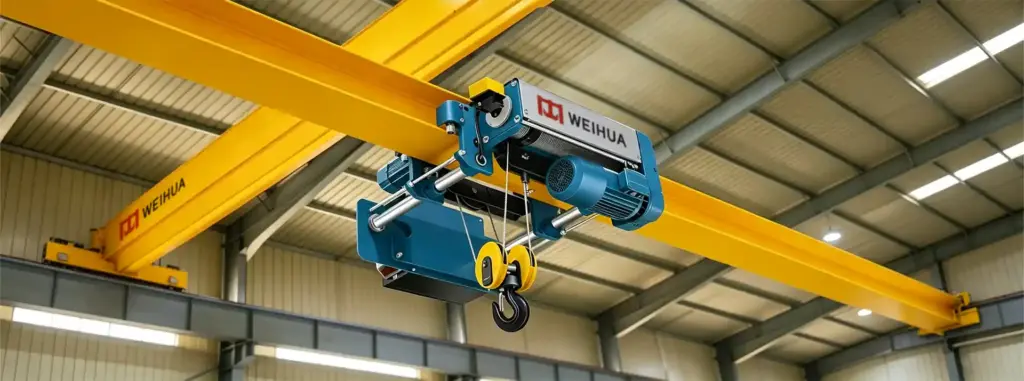
European-style hoists generally operate more quietly because they use precision-cut gears, rigid housings, and VFD-controlled motion. Consequently, communication becomes easier, operators experience less fatigue, and the overall working environment becomes more comfortable.
For facilities operating multiple cranes, these improvements can make a noticeable difference throughout daily production.
Looking Ahead: Meeting the Needs of Modern Industry
Industrial production continues to evolve. Therefore, lifting equipment must evolve as well.
Today’s manufacturers evaluate hoists based on reliability, efficiency, maintainability, automation compatibility, and total operating costs instead of simply comparing technical specifications.
European-style hoists address these priorities through compact construction, precise motion control, efficient operation, and dependable performance. Rather than representing a temporary trend, they provide a practical long-term solution for companies seeking measurable improvements in material handling.
Looking ahead, the demand for lifting equipment that balances productivity, safety, and operating efficiency is expected to continue growing. Ultimately, many manufacturers choose European-style hoists because they solve practical challenges while supporting modern production requirements.
Frequently Asked Questions
1. Which industries use European-style hoists?
Automotive manufacturing, steel processing, machinery production, logistics, aerospace, energy, and other industries that require reliable material handling.
2. What makes European-style hoists different from conventional hoists?
Their compact dimensions, smooth VFD-controlled operation, improved energy efficiency, and compatibility with automated production systems.
3. Can they help reduce operating costs?
Yes. In addition to lowering energy consumption, they reduce component wear, which helps lower maintenance expenses over the equipment’s lifecycle.
4. Are they suitable for automated production lines?
Yes. Because they provide accurate positioning and standard control interfaces, they integrate easily with PLCs and automated manufacturing systems.
5. What should be considered before purchasing one?
Besides lifting capacity, buyers should evaluate lifting height, duty classification, installation space, environmental conditions, maintenance access, and compliance with local safety standards. Whenever possible, a site assessment by the supplier is recommended.