In a busy workshop, materials do not always move in a straight line. A component may need to go from one assembly station to another, wait for inspection, and then move to the next part of the process. When this happens throughout the day, moving everything by hand can become an unnecessary part of the job.
This is where KBK crane system can make a practical difference. Instead of covering the whole workshop with a large overhead crane, the lifting system can be arranged around the areas where materials actually need to move.
Where KBK Systems Fit into Production
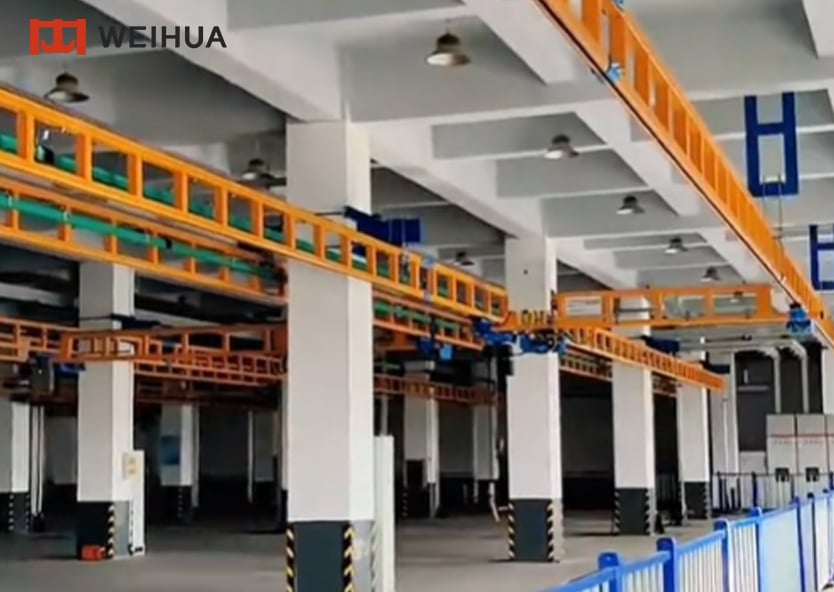
KBK cranes are commonly found around assembly areas, machinery workshops, manufacturing lines, and other production spaces where loads need to travel between fixed working points.
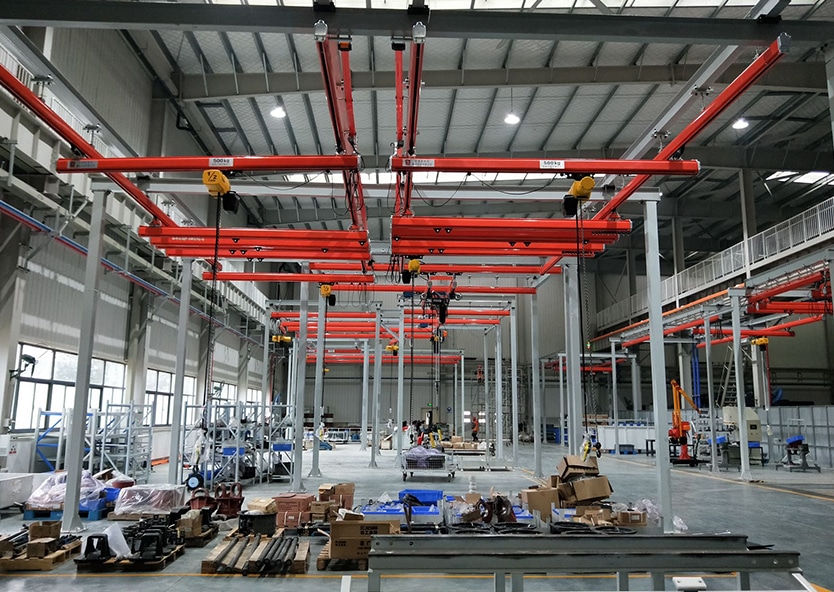
Take a machine assembly area as an example. A motor or other component may arrive at one side of the workstation and later need to be moved a few meters for installation. With a KBK track above the work area, the operator can lift the component and move it along the planned route rather than relying on floor-level handling.
The same idea works on a production line with several stations. The track can follow the workflow, so the lifting equipment is placed where it is needed instead of forcing the production process to follow the crane.
What Makes KBK Useful on a Production Line?
One of the practical advantages of a KBK system is that it works well with smaller, repeated lifting jobs.
A factory may not need a large overhead crane to handle every load in the building. Sometimes the requirement is much more local: lift a component, move it to the next station, and lower it again. A KBK crane can handle this type of movement while leaving the floor available for machines, storage, and other production work.
There is also less need to move materials around the workshop simply because the lifting equipment is somewhere else. When the track is planned around the production area, lifting points can be placed close to the actual workstations.
Applications You May See in a Factory
The exact use depends on the production process, but KBK systems are often used for machinery assembly, component handling, equipment manufacturing, metal processing, and workstation material handling.
They can also be useful where the same type of load needs to be moved repeatedly between several positions.
For example, an assembly workshop may have several stations arranged in a row. A straight KBK track may be enough in this case. If the workstations are arranged around a machine or production cell, a curved track or a different track layout may make more sense.
The point is not to make the crane cover as much space as possible. The better approach is usually to make the lifting route match the way materials move through the workplace.
Choosing the Right KBK Layout
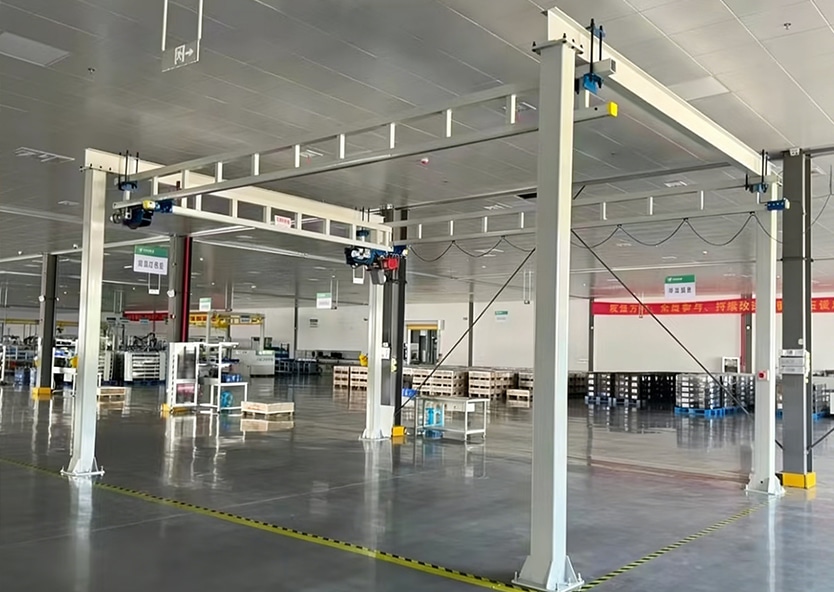
KBK systems are modular, so the track does not have to look the same in every workshop.
A monorail system is a straightforward option when loads mainly follow one route. For areas with more than one lifting point, other KBK configurations can provide greater coverage.
The choice between manual and electric travel also depends on how the crane will be used. Manual travel may be enough for lighter loads and occasional movement. If operators need to move loads frequently along a longer track, electric travel can make the operation more convenient.
There are also curved track sections, telescopic beam arrangements, and different supporting structures for particular layouts. These details should be decided after looking at the workshop, rather than selecting a configuration first and trying to make the production line fit it.
Think About the Production Process First
A KBK crane should be planned around the work being done underneath it.
Before designing the system, it helps to look at where materials arrive, where they are lifted, how far they need to travel, and where they are finally placed. The lifting height and available overhead space matter as well.
Load capacity is another basic consideration. The system needs to account for the heaviest load that will actually be handled, not simply the average load used during normal production.
A simple workshop layout can be very useful at this stage. It gives the crane designer a clearer picture of the travel route, lifting points, existing equipment, and available installation space.
A Practical Option for Changing Production Areas
Production lines often change over time. A workstation may be moved, a new machine may be added, or the material flow may be rearranged.
This is one reason modular lifting systems are considered for production areas. The design can be based on the current workflow while leaving room to adjust the system later when the working area changes.
That does not mean every KBK system can be changed without engineering work. The supporting structure, load capacity, track arrangement, and other technical factors still need to be checked before any modification is made.
Final Thoughts
A KBK crane system does not need to be complicated to be useful. In many production areas, its job is quite simple: lift a component and move it from one working position to another without getting in the way of the production floor.
The most suitable arrangement depends on the actual workshop. A straight track may work well for a simple assembly line, while a more involved production area may need curves, multiple tracks, or electric travel.
For this reason, the production process should come first when planning a KBK crane. Once the material flow and working points are clear, the crane configuration becomes much easier to determine.
Frequently Asked Questions
1. What is a KBK crane system mainly used for?
KBK crane systems are used for overhead material handling in production areas, assembly workshops, machinery manufacturing, and similar workplaces.
2. Can a KBK crane follow a production line?
Yes. The track can be arranged along the required material-handling route and positioned above selected workstations.
3. Is manual or electric travel better for a KBK crane?
Neither is automatically better. Manual travel can work for lighter or less frequent movements, while electric travel may be preferred when loads move more often or over longer distances.
4. Can KBK tracks include curved sections?
Yes. Curved sections can be incorporated when the production layout requires the load to change direction.
5. What information is needed before designing a KBK system?
The main information includes load capacity, lifting height, travel route, workshop dimensions, lifting points, operating frequency, and the available supporting structure. A workshop layout is also useful during the design stage.