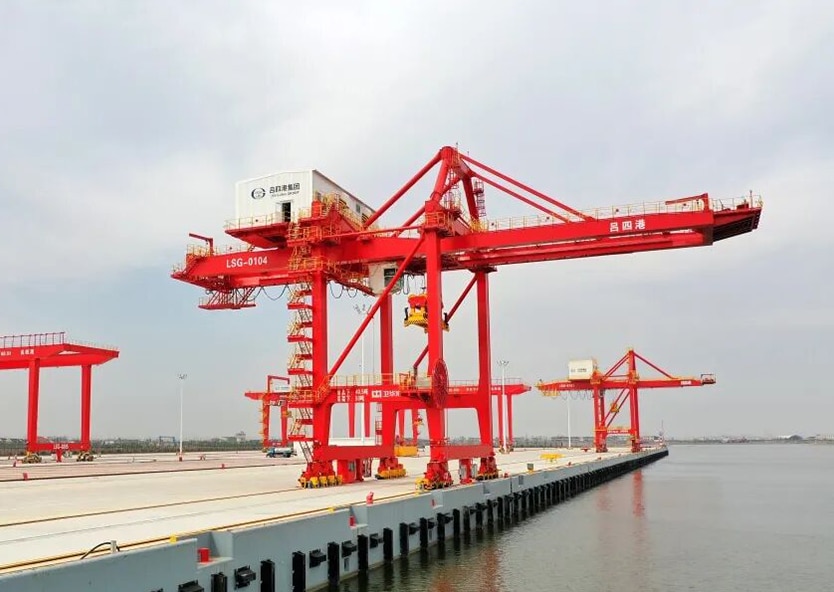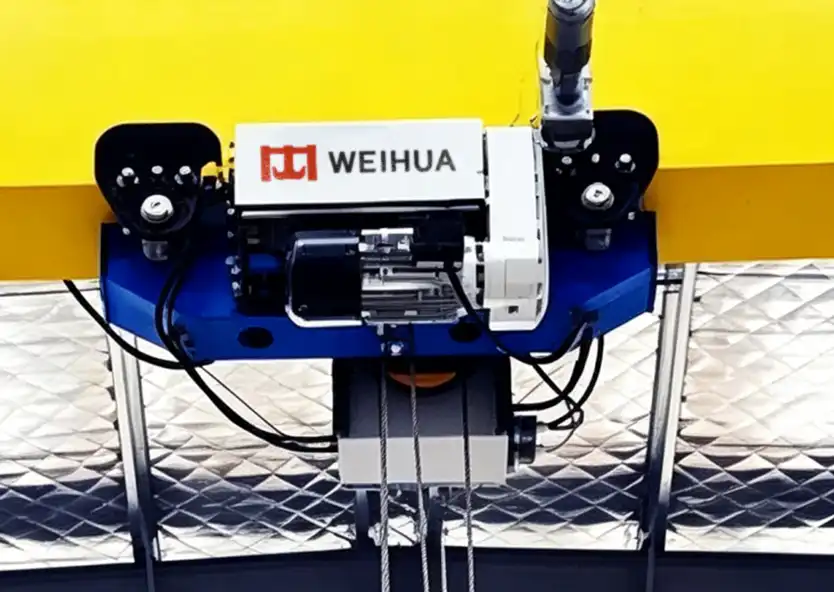
Wei Hua is a professional manufacturer of lifting equipment and material handling solutions. The company researches and produces a variety of products, including overhead cranes, electric wire rope hoists, electric chain hoists, jib cranes, intelligent lifting systems, and crane components.
Choosing the right hoist can directly affect lifting efficiency, operating effort, and workplace safety. Electric hoists and manual hoists serve different needs. Understanding their differences helps users choose a suitable lifting solution for workshops, warehouses, manufacturing plants, and other industrial environments.
Electric Hoists and Manual Hoists: Basic Differences
Electric hoists use an electric motor to lift and lower loads, while manual hoists rely on human force. As a result, electric models are generally better suited to frequent lifting, whereas manual hoists can work well for occasional or lighter-duty tasks.
When an Electric Hoist Is a Better Choice
An electric hoist is suitable when materials must be lifted repeatedly during daily operations. With motorized lifting, operators can handle loads without continuously applying manual force. In addition, electric hoists can be integrated with cranes and different control systems for more convenient operation.
When a Manual Hoist Makes More Sense
Manual hoists can be practical where lifting frequency is low or electrical power is unavailable. They have a relatively simple operating principle and can be useful for maintenance work, installation tasks, and other applications where lifting requirements are limited.
Lifting Efficiency and Operator Effort
The main difference is operating effort. Electric hoists complete lifting through motor power, reducing the physical effort required from operators. Manual hoists depend on hand operation, so lifting speed and convenience are more closely related to the working conditions and operator input.
Installation and Operating Considerations
When choosing a hoist, customers should carefully consider the required lifting capacity, lifting height, usage frequency and cycle, installation space, and maintenance conditions, as well as other control requirements. In addition, the hoist must be compatible with the structure of the crane to achieve maximum efficiency and improve the quality of daily work.
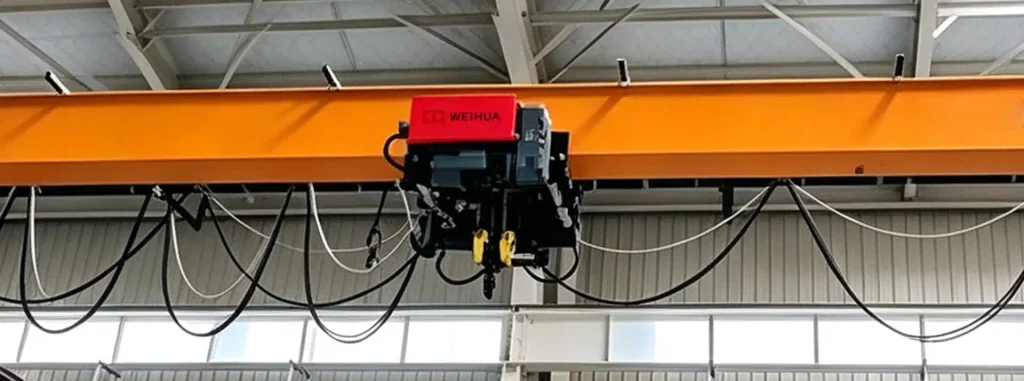
How to Choose the Right Hoist for Your Application
There is no single hoist that fits every industrial application. For frequent material handling, an electric hoist is often more practical. However, for occasional lifting or locations without a suitable power supply, a manual hoist may be a reasonable option. The final choice should be based on actual operating conditions.
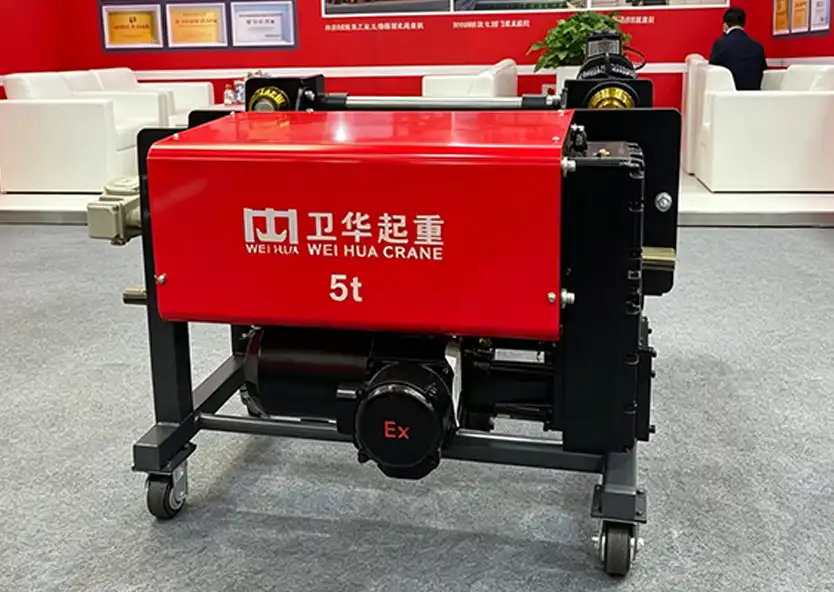
Weihua manufactures electric wire rope hoists for a wide range of industrial applications. The company also offers other types of electric hoists, such as low-headroom hoists and electric chain hoists.
Frequently Asked Questions
1. What is the main difference between an electric hoist and a manual hoist?
An electric hoist uses a motor for lifting, while a manual hoist requires operator input. Therefore, electric hoists are generally more convenient for frequent lifting operations.
2. Is an electric hoist suitable for continuous industrial lifting?
It can be suitable for frequent industrial lifting when its capacity and duty class match the application. Users should evaluate the actual lifting frequency and working environment before selection.
3. When should I choose a manual hoist?
A manual hoist may suit occasional lifting, maintenance work, installation tasks, or locations where electrical power is unavailable or unnecessary.
4. Can an electric hoist be used with an overhead crane?
Yes. Electric hoists are commonly used as lifting mechanisms on overhead cranes and other crane systems. The hoist should be selected according to the crane’s design and required lifting parameters.
5. What factors should be considered when selecting a hoist?
Key factors include lifting capacity, lifting height, lifting frequency, working environment, power supply, installation conditions, and required control method.
6. Can Weihua provide customized lifting solutions?
Yes. Weihua can provide equipment selection and technical solutions according to project requirements, including lifting capacity, working conditions, operating methods, and other application factors.