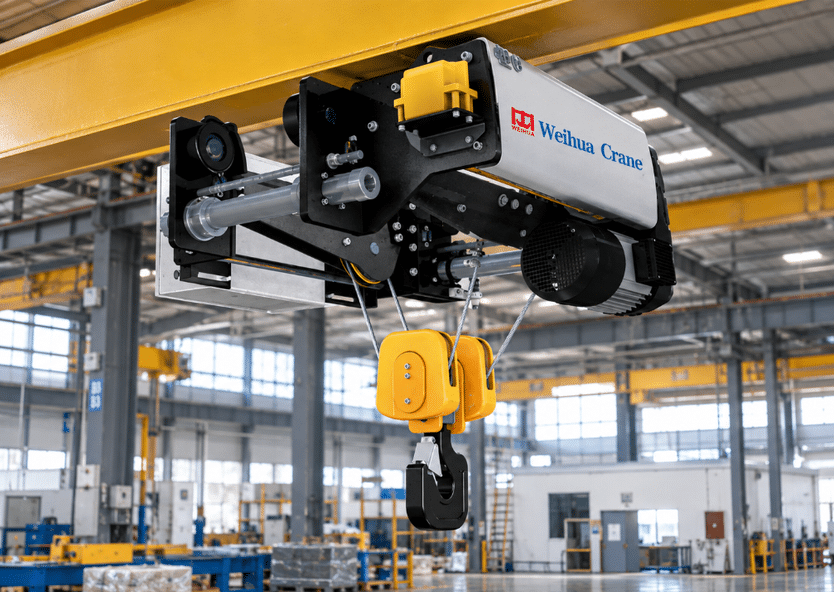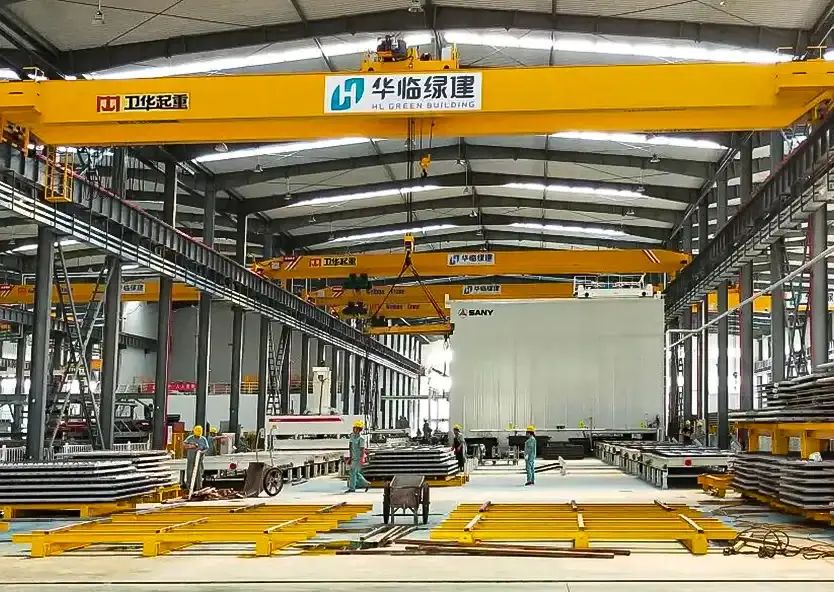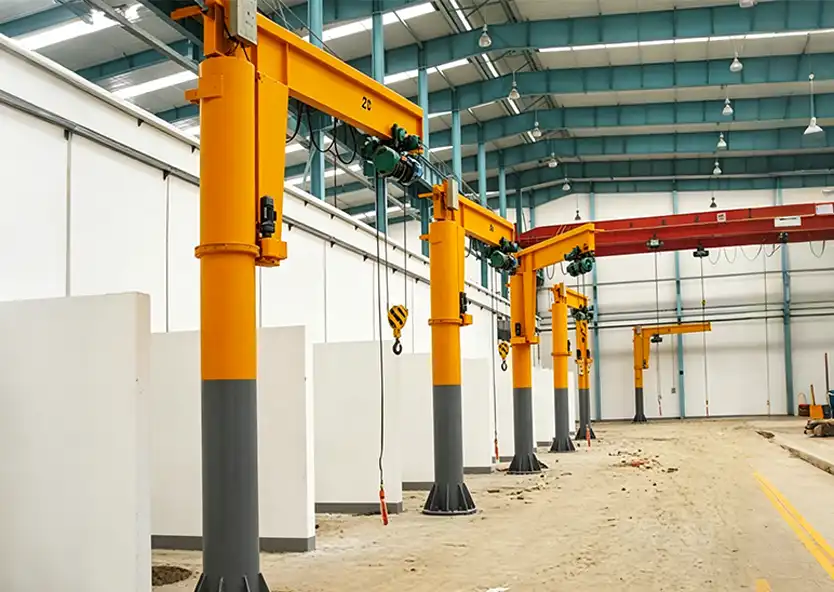
There are various types of lifting equipment available. Besides overhead cranes and gantry cranes, many workshops and production areas also need to handle loads in confined spaces. For these jobs, companies can use jib cranes to handle materials within a limited area.
This type of equipment moves loads within a limited range. The arm swings around a fixed point and covers a set working area.
What Is a Jib Crane?
A jib crane handles loads within a specific work area. It usually consists of a support, jib arm, trolley, hoist, and control system. The hoist lifts the load, the trolley moves it along the arm, and the jib swings it to the required position.
Depending on the installation method, various types of jib cranes are available. They can be floor-mounted or attached to an existing wall structure. The floor-mounted type provides an independent supporting structure, while the wall-mounted type makes full use of building space and is ideal for areas with limited floor space.
Where Are Industrial Jib Cranes Used?
Common applications include:
Manufacturing workshops – moving parts and tools between workstations.
Machine maintenance areas – providing dedicated lifting near equipment.
Assembly lines – creating efficient, short-path lifting zones.
Warehouses – assisting with loading/unloading at specific points, while saving floor space.
Steel fabrication – handling smaller, repetitive tasks like plates and components; larger jobs may require overhead or gantry cranes.
The Main Advantages of the Jib Crane
1. Concentrated lifting coverage
A jib crane serves a specific working area. Therefore, it can be installed near machines, workstations, assembly points, or loading areas.
2. Effective use of floor space
Wall-mounted and floor-mounted configurations can adapt to existing layouts. In particular, the wall-mounted design reduces the need for additional floor-based support structures. However, the supporting structure must have sufficient strength to withstand the crane and its operating load.
3. Flexible rotation
Jib cranes are available with different rotation ranges, including 180°, 270°, and 360°.
The required rotation angle should match the actual material flow. A larger rotation range does not need to be selected if the working area does not require it.
4. Suitable for repetitive operations
Jib cranes work well for repeated lifting tasks. The operator can lift the load, move it along the boom, and swing it into place. This simple movement pattern is well suited for localized handling tasks.
5. Multiple installation options
Industrial jib cranes offer several installation options. You can mount them on a column or wall, or use a wall-traveling system.
Jib Crane Types
The pillar jib crane uses an independent vertical column to support the rotating boom. This design is particularly suitable when the building walls cannot provide the required support.
A wall-mounted jib crane attaches to an existing building structure, so it takes up little floor space. It can serve work areas along the wall or close to a production line.
An articulated jib crane has a hinged boom that can move around obstacles and reach areas a straight boom may not cover. It is especially suitable for use around machinery, in corners, and near workbenches where the lifting path is not straight. Before installation, engineers need to check the strength and suitability of the supporting structure.
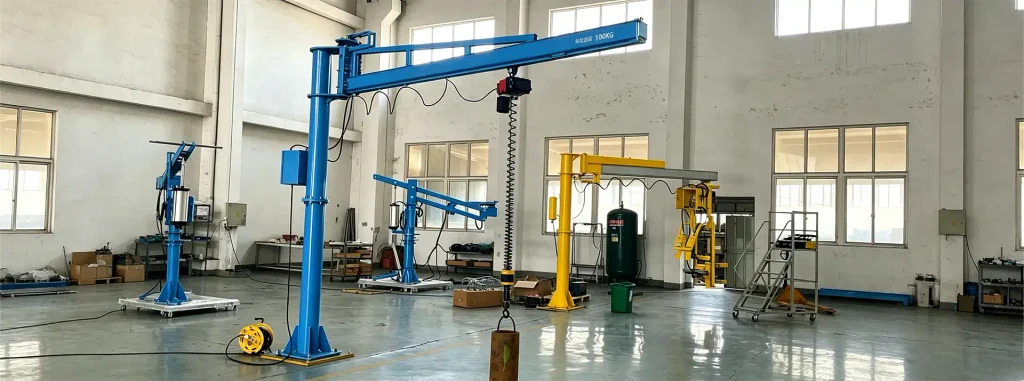
How to Select the Right Industrial Jib Crane
Start with the actual lifting conditions when selecting a jib crane. Check the heaviest load first and make sure the crane’s rated capacity is enough for the job. Never select a crane with a capacity lower than the required load. Next, check the required working radius. The jib length should provide enough reach while avoiding unnecessary extension.
Then, determine the lifting height. The available building height, load dimensions, and required clearance all affect this value.
The rotation angle also matters. A 180° rotation may be sufficient for a crane installed along a wall, while a central workstation may require a wider rotation range.
In addition, consider the duty class and operating frequency. A crane used occasionally for maintenance may have different requirements from one used repeatedly throughout a production shift.
Finally, check the installation location and power supply. For a pillar-mounted crane, the foundation and column arrangement need proper consideration. For a wall-mounted crane, the supporting structure must be suitable for the applied loads.
Frequently Asked Questions
1. What are the main uses of industrial jib cranes?
Industrial jib cranes handle loads in a defined work area. They are commonly found near workstations, assembly areas, machines, warehouses, and production lines.
2. What are the differences between jib cranes and traditional large cranes?
A jib crane serves the area around its support, while an overhead crane can cover most of the building. For small, repeated lifting jobs, a jib crane is usually the simpler option.
3. Can jib cranes be installed outdoors?
Yes, jib cranes can be designed for outdoor environments. However, outdoor use requires careful consideration of factors such as weather exposure, anti-corrosion protection, wind loads, electrical protection, and support structures.
4. What is the lifting capacity?
The standard jib crane series from Weihua offers a lifting capacity range of approximately 0.25 to 10 tons. The actual selection should be determined based on load weight, working frequency, boom length, installation method, and other project-specific conditions.
5. How do I choose between a column-mounted and a wall-mounted jib crane?
A column-mounted jib crane has its own support column, so it does not depend on the building wall. A wall-mounted crane is fixed to the existing structure and can leave more floor space available. The choice depends on the building structure and the space available at the installation site.
6. Can jib crane specifications be customized?
Yes. Customers can customize the crane’s capacity, boom length, lifting height, rotation angle, hoist, controls, mounting type, and power supply to suit the job.