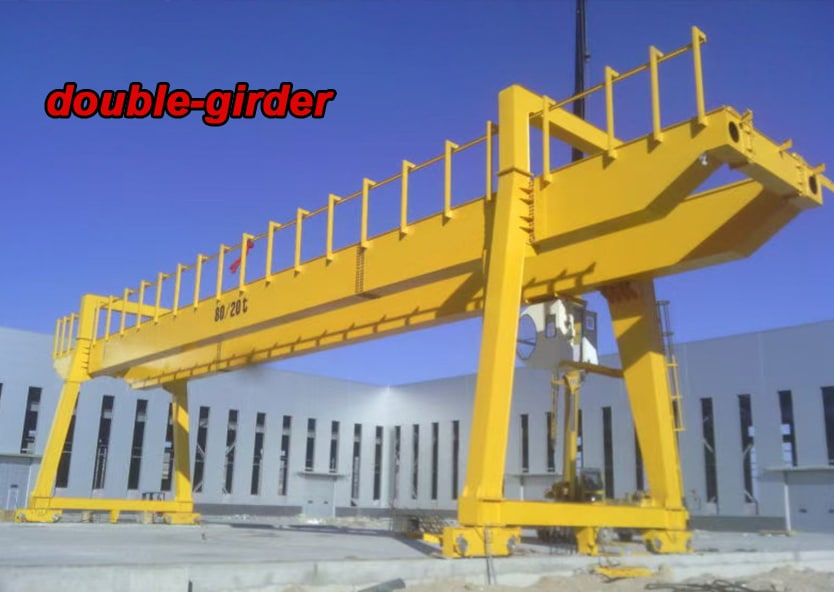
When you set up bulk handling work, grab bucket selection is one practical choice that shapes your daily throughput. Many buyers only check lifting load and bucket volume before placing orders. They run into trouble after installation. A grab can match your crane mounting size, but it lets fine particles escape, cannot hold odd-shaped pieces steady, or suffers fast wear after long hours of running each day.
Two grab styles dominate this field. You can mount both types on overhead cranes or gantry cranes to move bulk goods, yet their operating logic is not the same. We list their basic features, typical working scenarios, and practical pros and cons here. You are able to find a suitable bucket and avoid costly testing on site.
What Is a Clamshell Grab Bucket
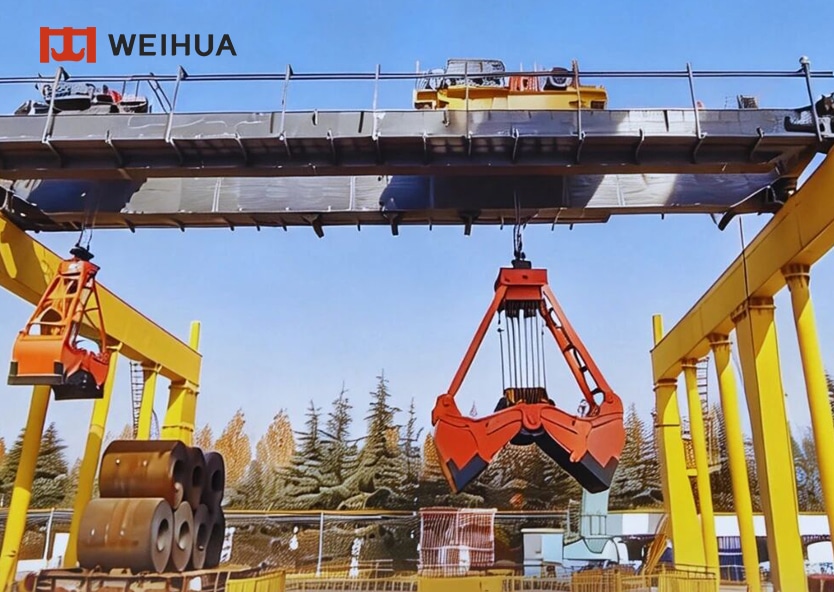
A clamshell grab has two curved shell halves. The shells close together to scoop material from stockpiles. You can find it made as a rope mechanical type or hydraulic type. Mechanical units depend on wire rope structures. Hydraulic styles install oil cylinders, so the closing action runs more steadily.
This grab fits loose bulk materials that flow freely. Coal, sand, grain, fertilizer, and fine ore can fill the inner space without extra effort. The two shell parts press close once fully shut, and less material will leak out while moving. It delivers high fill rate for uniform granular goods. Ports, power plants, and grain warehouses use this design most often.
It also carries clear limits. Clamshell shells push aside tangled, jagged, or oversized pieces. You cannot get a stable grip on scrap steel, broken concrete blocks, or mixed waste. The bucket will slip and drop loads.
What Is an Orange Peel Grab Bucket
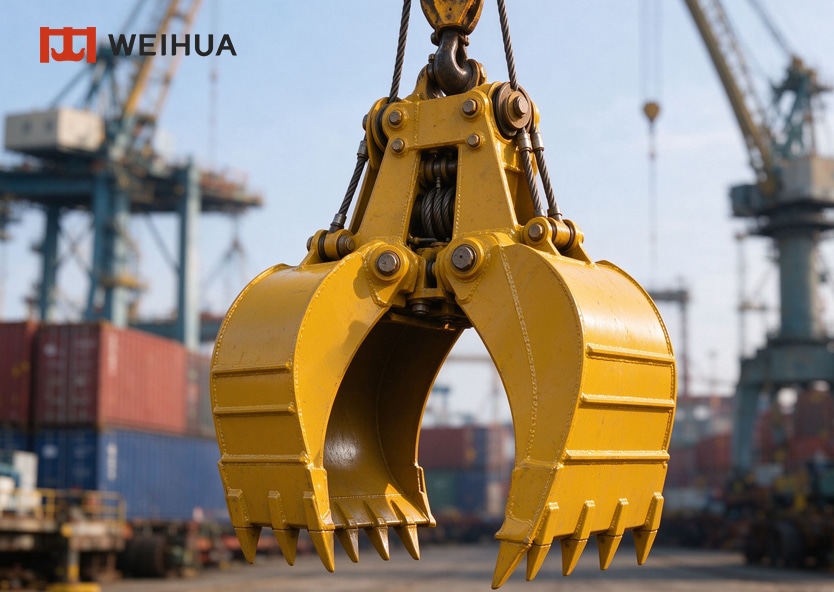
An orange peel grab uses 4 to 6 curved tines. These tines move inward from all directions, just like orange segments folding in. Most versions run on hydraulic power, and they have strong penetration force.
This design does not scoop. It pierces piles and clamps around uneven objects. Scrap yards, steel mills, and waste recycling sites depend on it. It holds scrap metal, rock chunks, slag, and mixed demolition waste. Tines dig into tangled piles and lock loads from multiple sides.
On the downside, orange peel grabs do not hold fine powder well. Gaps between tines let sand, grain, or ash leak out. It also costs more to maintain. Hydraulic seals and tine tips wear fast when you work with sharp, hard scrap.
Key Points to Compare Them Side by Side
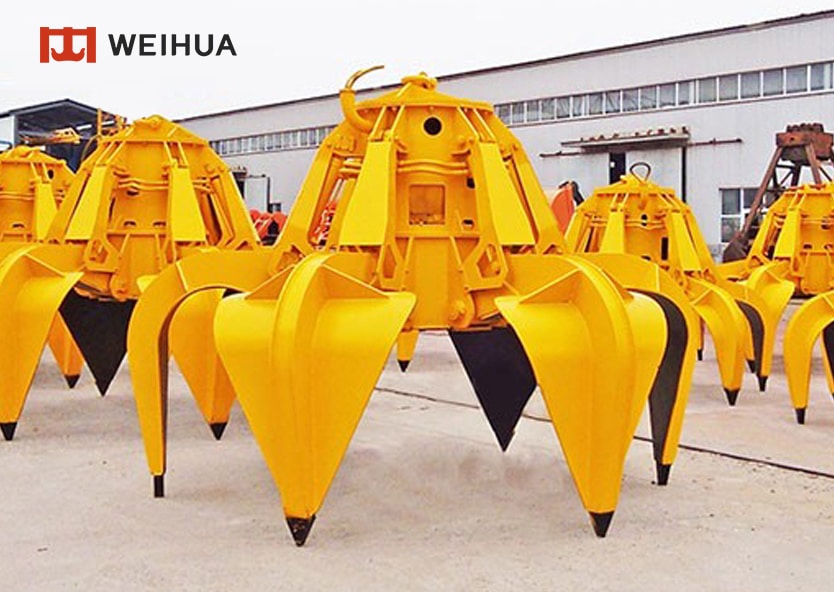
Start with your material type. If your goods flow smoothly and have even particle size, clamshell grab is the safer pick. If your loads are irregular, sharp, or interlocked, orange peel grab makes more sense. Material density sets the payload, so check it before you compare volume figures. Coal sits near one tonne per cubic metre, grain and fertilizer below that, sand and dredged sludge around one and a half, and scrap steel and pig iron between two and three.
Next, check your working cycle. Clamshell grabs run fast for steady bulk loading. They need less frequent service. Orange peel grabs suit heavy, intermittent scrap handling. They need routine checks on hydraulic parts.
You also need to match the grab to your existing crane. Some older overhead cranes only support mechanical rope grabs. Hydraulic orange peel units need an extra hydraulic power supply on the crane. You cannot add it freely without a crane upgrade. Bucket size follows from the same calculation. Multiply the volume per cycle by the density of your heaviest material, add the weight of the grab itself, and keep fifteen to twenty percent of the crane’s rated capacity in reserve.
Budget is another factor. Standard clamshell grabs usually come with lower upfront cost and simpler repairs. Orange peel grabs carry a higher purchase price. You pay more for spare tines and hydraulic parts over time.
Quick Selection Checklist You Can Use
Ask yourself these simple questions before you decide. What bulk material will you move every day? Does the material spill easily through gaps? Are pieces tangled or sharp? How many hours will the grab run each shift? Can your crane support hydraulic accessories?
If three or more answers point to loose fine bulk, go for a clamshell grab. If most answers relate to irregular solid scrap, choose orange peel grab. When you handle mixed materials, talk to your grab supplier. They can suggest custom jaw thickness or special sealing options.
Weihua supplies both types for overhead crane work. The QZ grab bucket overhead crane covers 5 to 25 tonnes of lifting capacity with grab volumes from 1 to 6 m³, spans from 10.5 to 34.5 metres, and A6 working class. Mechanical, motorized, and hydraulic grabs are all available in the same configuration.
Frequently Asked Questions
1. Can I use one grab bucket for both grain and scrap steel?
No. Clamshell grabs cannot grip scrap reliably. Orange peel grabs leak large amounts of grain or sand between tines. You need separate grabs for these different materials.
2. Which grab lasts longer in daily continuous work?
Well-maintained mechanical clamshell grabs usually have a longer service life for light and medium bulk. Orange peel tines face constant impact from scrap, so replacement cycles are shorter.
3. Does every orange peel grab need a hydraulic system?
Most orange peel grabs use hydraulics. A small number of mechanical rope orange peel grabs exist, but they offer weaker clamping force and less precise control. Hydraulic style remains the mainstream choice.
4. What size range do these two grab types cover?
Clamshell grabs commonly range from 0.5 m³ up to 20 m³. Orange peel grabs normally sit between 0.6 m³ and 10 m³. Actual available size depends on your crane lifting capacity.
5. Can I fit these grabs on an overhead crane I already own?
You need to check the crane hoist configuration first. Mechanical clamshell grabs need special double-rope hoist units. Hydraulic grabs require mounting space and power setup on the crane bridge.
6. How do I reduce spillage during operation?
For clamshell grabs, pick a model with good shell edge sealing. For orange peel grabs, select closed tine designs if you work with small fragments. Keep closing speed steady and avoid sudden lifting when the grab is full.