Gantry cranes and overhead cranes are widely used across many industries. However, they differ in structure, installation, and operating environment. As a result, the right crane depends on your facility rather than the lifting task alone.
Before choosing a crane, compare how each type works and where it performs best. This guide explains the key differences, common applications, and the main factors to consider before making a decision.
What is a Gantry Crane?
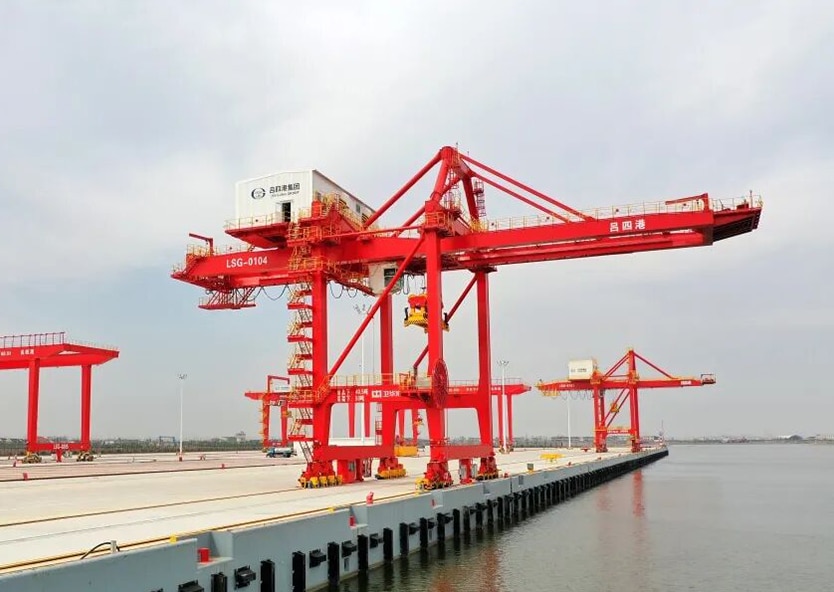
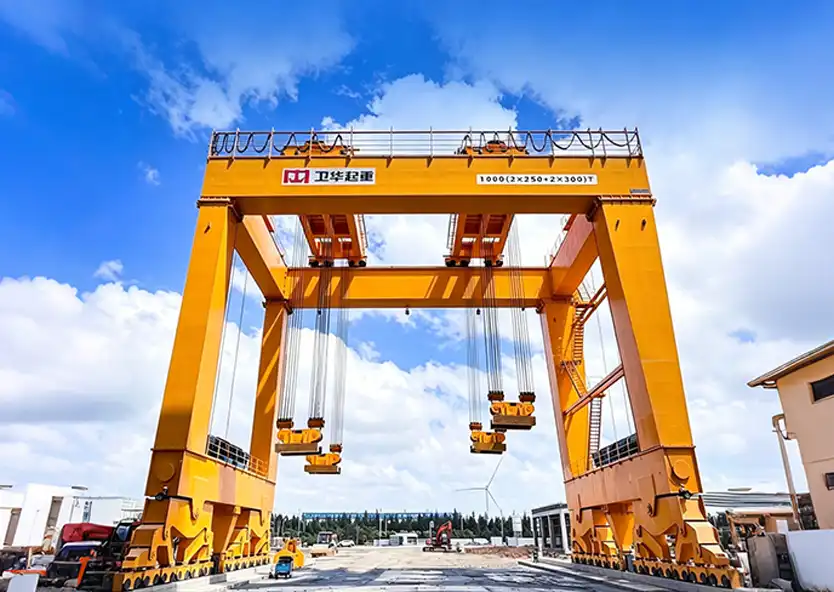
A gantry crane consists of a horizontal bridge girder supported by two legs, forming a portal frame. This crane travels on ground rails and mainly handles loading, unloading, and installation work in open storage yards, docks, power stations, ports, and railway freight terminals.
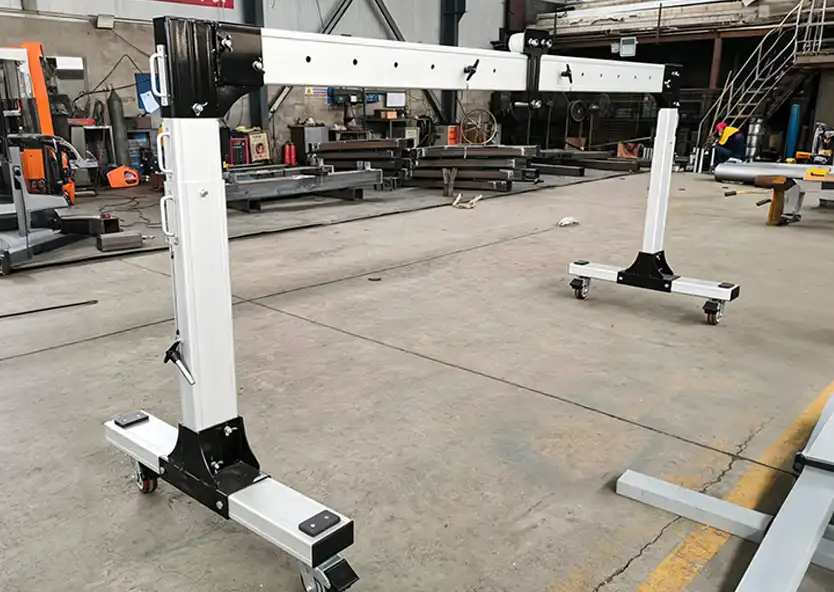
Of course, Wei Hua also offers various types of gantry cranes to meet different lifting requirements. The full-span gantry crane provides maximum coverage for large operation areas, while the semi-gantry crane combines ground support legs and track beams.Portable and mobile gantry cranes work well for maintenance, equipment assembly, and other light-duty lifting tasks that require frequent movement.
What is an Overhead Crane?
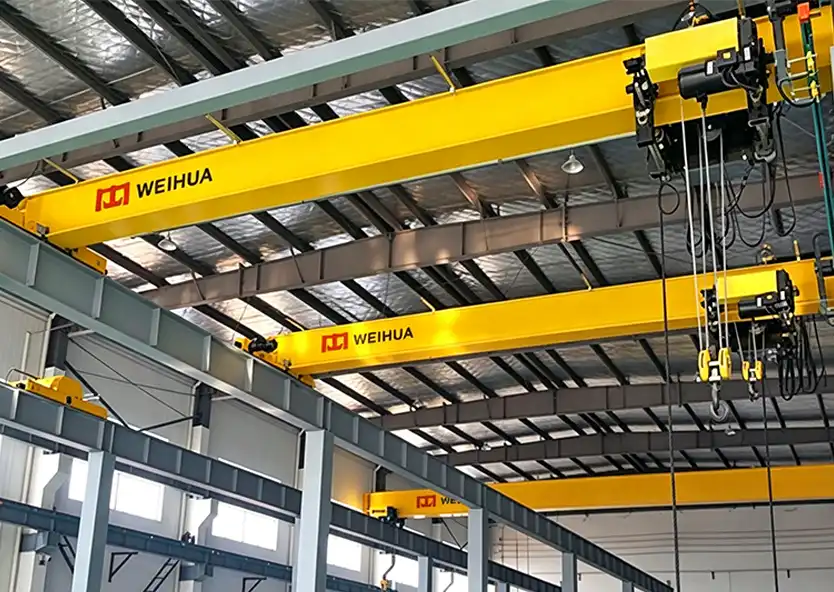
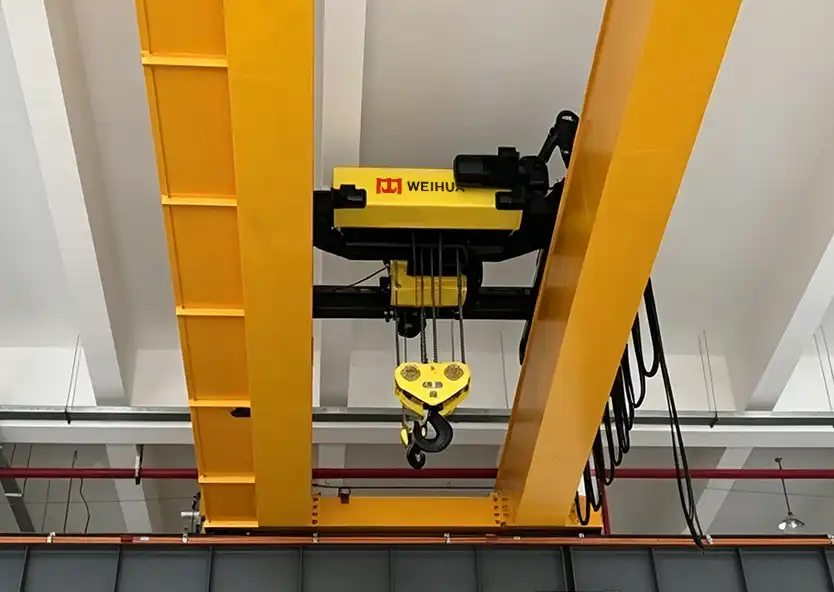
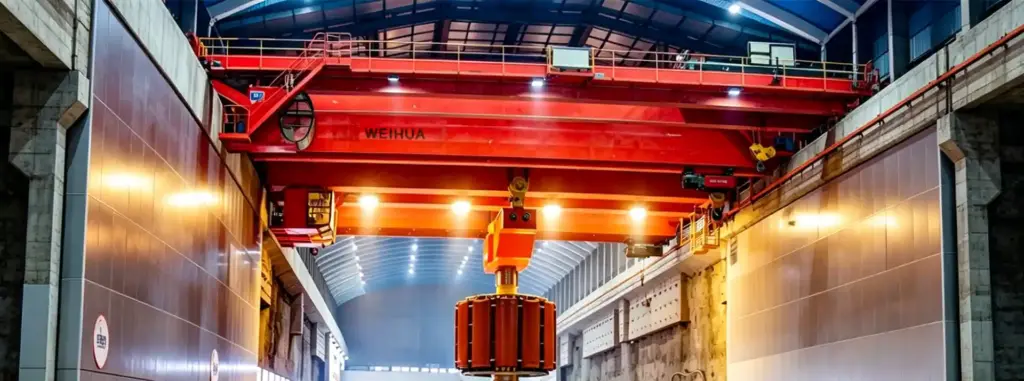
The overhead crane moves along the track beams installed on the building columns or independent support structures. When the trolley moves along the bridge girder, it can precisely lift and position materials, while the bridge structure spans the entire workshop.
Because the crane operates above the production area, it leaves enough floor space for forklifts, production equipment, and workers. As a result, daily operations become more efficient with fewer interruptions.Therefore, manufacturers commonly use overhead cranes in production plants, machine shops, steel mills, power stations, automotive factories, and warehouses.
Similarly, there are two main configurations of overhead cranes. Customers can choose between single-beam and double-beam designs based on their own needs, while also considering the required lifting capacity, span, lifting height, and duty class.
The Major Differences Between Two Cranes
Although both cranes perform similar lifting functions, they differ in several important areas.
| Feature | Gantry Crane | Overhead Crane |
| Supporting Structure | Self-supported by legs | Supported by runway beams |
| Installation | Minimal building modifications | Requires runway structure |
| Operating Location | Indoor and outdoor | Primarily indoor |
| Floor Space | Legs occupy part of the working area | Leaves floor completely open |
| Mobility | Can be relocated more easily | Permanent installation |
| Initial Cost | Generally lower | Usually higher |
| Typical Applications | Shipyards, ports, construction sites, storage yards | Manufacturing plants, warehouses, production workshops |
| Long-Term Productivity | Excellent for flexible operations | Excellent for continuous production |
No single crane fits every application. Instead, start with your working environment, production schedule, and available space. A gantry crane offers greater flexibility for outdoor and open work areas, while an overhead crane improves efficiency inside production facilities. In addition, thinking about future expansion helps you avoid unnecessary upgrades later.
How to Choose the Right Crane for Your Facility
So, what basic aspects should be considered when choosing a crane at first?
1. Installation environment
If the lifting area is outdoors or in an open space, a gantry crane is usually more suitable.On the other hand, if the crane will operate inside a factory with adequate structural support, an overhead crane usually delivers higher productivity.
2. Lifting capacity and span
The weight of the loads and the required working span directly affect the choice of crane. Both gantry cranes and overhead cranes are available in various capacities and spans.In addition, double-girder cranes provide higher lifting capacity, better stability, and greater hook height for demanding industrial applications.
3. Working frequency
If lifting tasks occur only occasionally, a gantry crane often makes more sense. However, facilities with continuous production usually benefit more from an overhead crane designed for higher duty cycles.
4. Cost and investment
Gantry cranes usually require less auxiliary infrastructure, thus reducing initial construction costs. However, overhead cranes often improve production efficiency over time and help reduce long-term material handling costs.
5. Future expansion and scalability
Production requirements often change as a business grows. Therefore, choosing a crane with room for future expansion can reduce upgrade costs and keep production running smoothly.
Need Help Choosing the Right Crane?
Tell us about your lifting requirements, and we’ll recommend a crane that matches your application, workspace, and budget. Whether you’re replacing existing equipment or planning a new project, our engineering team is ready to help.
Frequently Asked Questions
1. Which is more cost-effective, a gantry crane or an overhead crane?
The price varies with each project. Crane size, installation conditions, and custom requirements all affect the total investment.
2. Can a gantry crane be used indoors?
Yes. Gantry cranes are often used outdoors, but many workshops also install them indoors. Smaller models work well where runway beams are unavailable or flexibility is important.
3. Which crane requires less maintenance?
No significant difference exists. Regular inspections and servicing are the best way to keep either crane operating safely.
4. Can these cranes be customized for different applications?
Yes. We offer custom options for lifting capacity, span, lifting height, controls, power supply, and special operating environments.
5. How do I choose the right crane?
First, review your workspace, lifting requirements, and daily workload. Then, our engineers can recommend a crane that fits your project.