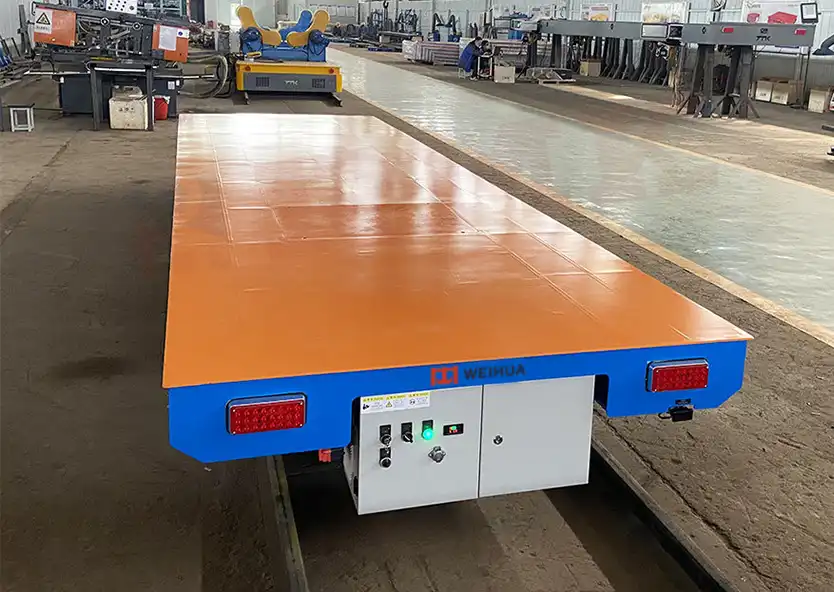
Older-style transfer carts run off fixed cables or floor rails, and anyone working in a factory knows how limiting that really is. These traditional power setups lock down your transport routes and don’t adapt well when your workflow changes. Battery-powered transfer carts get rid of that hassle entirely, running on built-in batteries right on the unit itself.
Factory owners can choose between lead-acid and lithium-ion batteries based on how their shop operates day to day, how much routine maintenance they can handle, and their overall project budget. We stock 48V, 60V, and 72V configurations to cover light all the way up to heavy industrial loads.
Most standard carts will run 6 to 10 hours on a full charge when carrying their rated load. That said, real factory use never follows exact numbers. Heavier materials, constant stopping and starting, and rough flooring all chip away at battery life. Staff operate these carts simply with onboard buttons or wireless handheld remotes. Most shops install dedicated charging stations for daily use. If your plant runs around the clock, keeping spare batteries or fixed charging points on hand is the easiest way to avoid work stoppages.
On-Site Operational Benefits
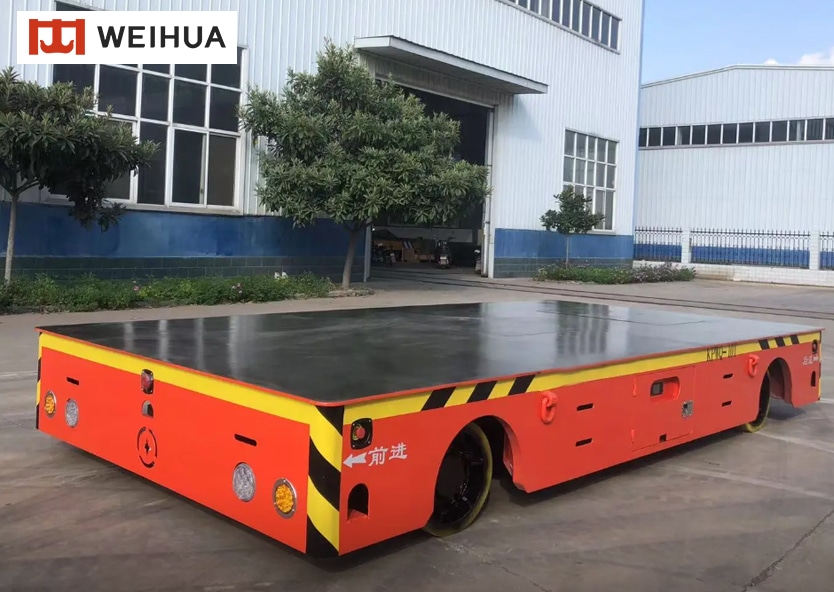
These battery carts fit perfectly into heavy manufacturing environments of all kinds. Steel shops rely on them to move steel plates, welded structures, and large assemblies through each stage of cutting, machining, and finishing work. Mold facilities use them constantly to move heavy stamping and injection molds between storage and production machines.
You’ll also see them widely used in mechanical assembly plants, new energy factories, and mining equipment workshops. They’re ideal for those extra-large, super-heavy parts that regular forklifts struggle to move safely. The biggest win for most factories? No more locked-in cable routes. If you switch up your production layout often, these carts adapt right along with you, making daily material movement far more flexible and efficient.
Daily Operation and Maintenance Guidance
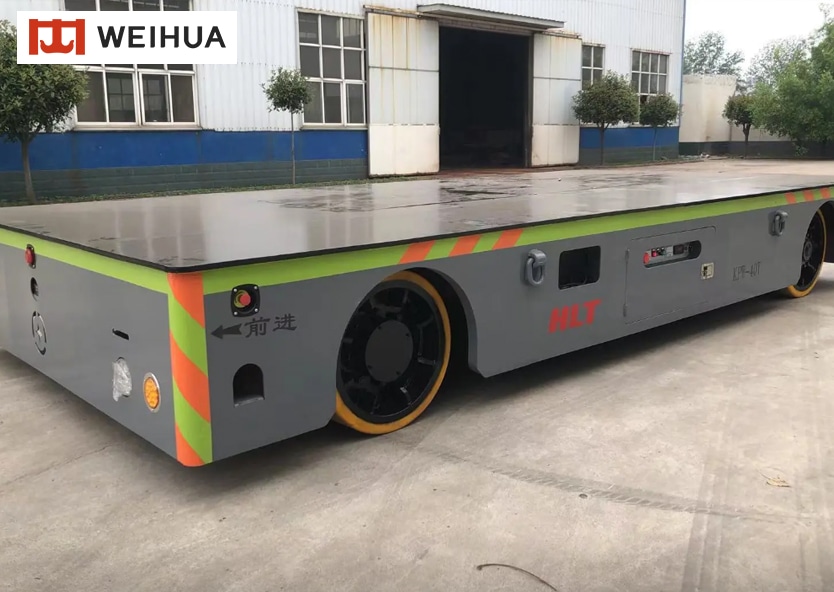
A little regular maintenance goes a long way in keeping your transfer carts running for years. Operators should always check battery levels before starting each shift. Letting batteries drain completely over and over wears them out fast and shortens their overall lifespan significantly.
It’s also important to keep the cart clean, especially around wheels and safety components. Metal shavings, dust, and workshop grime build up quickly and can cause unstable movement if left uncleaned. Every day before use, make sure alarms and emergency stop features work properly — it’s a quick check that prevents most on-site safety issues.
Shops running multiple shifts can stick to fixed charging schedules or keep swappable batteries ready to go for nonstop operation. Just keep in mind that cold workshop conditions slightly lower battery performance, so you’ll want to adjust your usage expectations during colder seasons.
Frequently Asked Questions
Q1: Can Weihua customize battery transfer carts for special factory conditions?
A1: Absolutely. We adjust cart specs to match your site, including load capacity, platform size, and control systems. Custom options include outdoor waterproof and low-profile cart designs.
Q2: How long can a fully charged battery cart work in actual production?
A2: Typically 6–10 hours at rated load. Actual runtime varies based on load size, stop-start frequency, and ambient temperature.
Q3: What battery options are available for industrial transfer carts?
A3: You can choose budget-friendly lead-acid batteries, or premium lithium-ion batteries for faster charging and less ongoing upkeep.
Q4: What standard safety features do these battery transfer carts include?
A4: Every cart comes with emergency stops, sound-light alarms, and overload protection. Anti-collision sensors and speed limiters are optional add-ons.
Q5: Can battery-powered transfer carts support 24-hour continuous production?
A5: A single cart can’t run nonstop alone, but swappable batteries or automatic charging stations let you run 24/7 operations without downtime.