Choosing explosion-proof cranes for hazardous sites is easy to get wrong. This guide covers the key points you need for product selection and compliance checks on overseas orders.
Hazardous Area Zones: Gas Zone 0/1/2 & Dust Zone 20/21/22 Quick Reference
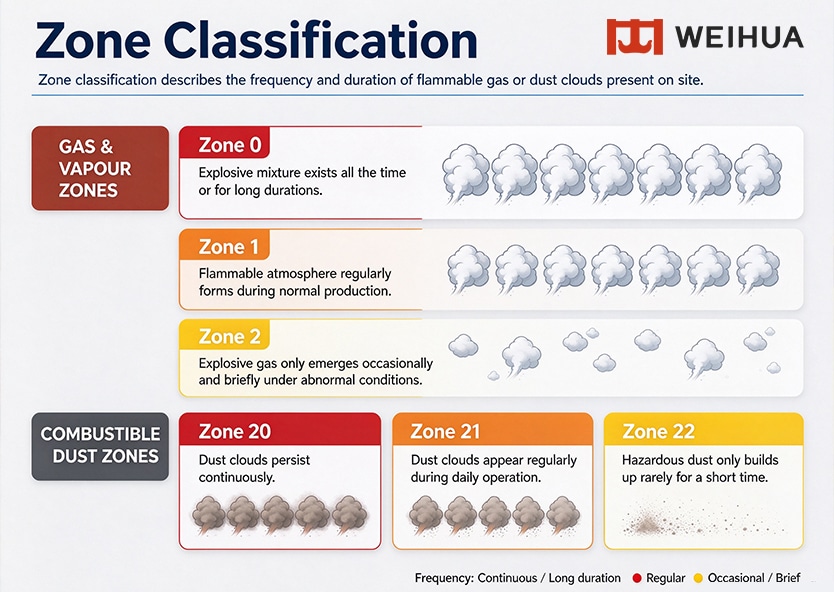
Zone classification describes the frequency and duration of flammable gas or dust clouds present on site.
- Gas & vapour zones: Zone 0: Explosive mixture exists all the time or for long durations. Zone 1: Flammable atmosphere regularly forms during normal production. Zone 2: Explosive gas only emerges occasionally and briefly under abnormal conditions.
- Combustible dust zones: Zone 20: Dust clouds persist continuously. Zone 21: Dust clouds appear regularly during daily operation. Zone 22: Hazardous dust only builds up rarely for a short time.
How to Read Ex Markings: Exd II BT4 vs Exd II CT4 & IIC Explained
We break down two core parameters: gas group and temperature class. First, gas group: IIA, IIB, IIC. IIB covers ethylene and ether, while IIC covers hydrogen and acetylene, the most dangerous flammable gases. An IIB-certified crane cannot work in IIC zones, but IIC equipment fits all IIA and IIB sites. Second, temperature class T1–T6, which sets the maximum surface temperature of crane parts: T1 (450°C), T2 (300°C), T3 (200°C), T4 (135°C), T5 (100°C), T6 (85°C). Ex d II BT4 is a typical example. Letter “d” means flameproof housing, IIB refers to the gas group, and T4 caps the maximum surface temperature at 135°C. Ex d II CT4 adopts the higher IIC classification, designed for highly ignitable gases.
ATEX vs IECEx: Scope & Selection Rules (EU / Multi-country Projects / Middle East)
Both systems reference the IEC 60079 standards, yet they differ greatly in legal enforceability. ATEX is legally required for goods sold into the EU under Directive 2014/34/EU. All cranes intended for hazardous areas in Europe need conformity assessment and CE marking. IECEx works as an international certification framework without mandatory force. Many countries recognise it, and it’s commonly accepted across the Middle East, Africa, and cross-border projects covering multiple regions. Quick guide for selection: go with ATEX for EU locations. For cross-border jobs, especially Middle Eastern buyers who won’t accept CE-only paperwork, IECEx is the safer pick.
Core Rule: Hoist Certification Alone Does Not Equal a Full Explosion-Proof Crane
This is a common and expensive error among purchasers: certifying only the hoist unit and leaving other electrical parts unapproved. The whole assembly must come under certification. That covers the main control cabinet, limit switches, anti-collision sensors, brake parts, festoon cabling, and site lighting. Drop in an ordinary, non-certified limit switch, and the entire crane’s Ex approval becomes void. This small part can create sparks and start an explosion.
SIX KEY DOCUMENTS TO CHECK DURING FACTORY AUDIT (CERTIFICATE DETAILS CAN BE VERIFIED ONLINE)
- Ex Certificate of Conformity, stating the exact model and complete Ex marking.
- EU Declaration of Conformity, required for shipments under ATEX requirements.
- Complete technical file including general arrangement drawings, calculation sheets, and referenced standards.
- Proof load test report that keeps all test readings on file.
- Installation and operation manuals stating approved zone types and working temperature limits.
- ISO 9001 certificate to validate the factory’s quality management system.
Even revoked or suspended IECEx certificates stay visible on the official database with status change timestamps. Reach out to the notified body to verify ATEX certificate information. Match all details against the crane’s nameplate marking and save screenshots for your records.
Real-World Application Scenarios
- Refineries and petrochemical plants: Zone 1 / Zone 2 gas environments for catalyst handling and routine maintenance work.
- Chemical facilities: Most areas fall under Zone 2. Operations involving hydrogen or acetylene require cranes rated for IIC gas groups.
- LNG terminals: Low-temperature sites with flammable vapours. Surface temperature limits and low-temperature material performance both need careful review.
- Offshore platforms: Multiple hazards coexist here. That’s why our heavy-duty Weihua offshore gantry cranes come fitted with flameproof electric sets, wind monitoring, and rail clamp locks.
- Coal mines: Underground mining follows Group I standards, separate from Group II specifications used for general industrial gas risks.
- Grain & food processing plants: Fine airborne flour, sugar, and starch dust may form Zone 21 or Zone 22 dust hazard zones. Weihua has manufactured lifting equipment in Changyuan County, Henan, since 1988 and supplies explosion-proof cranes for these sectors.
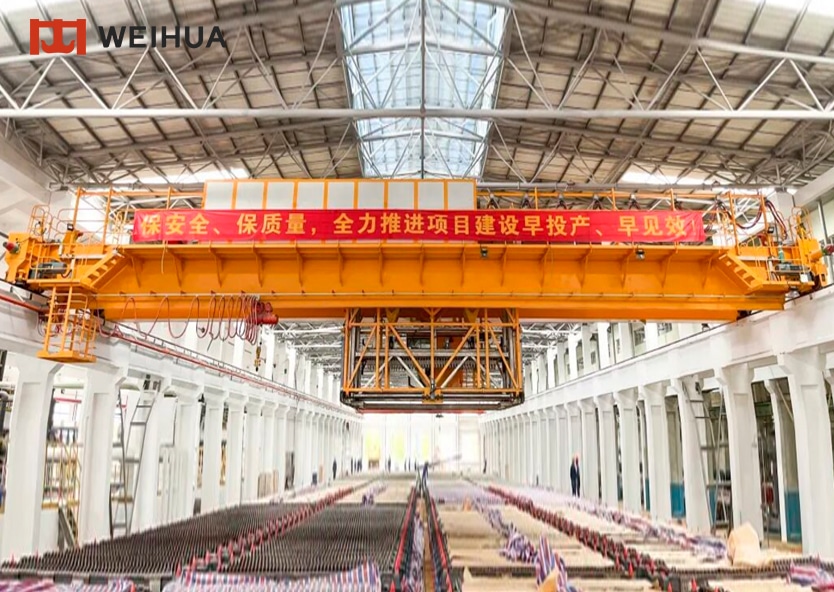
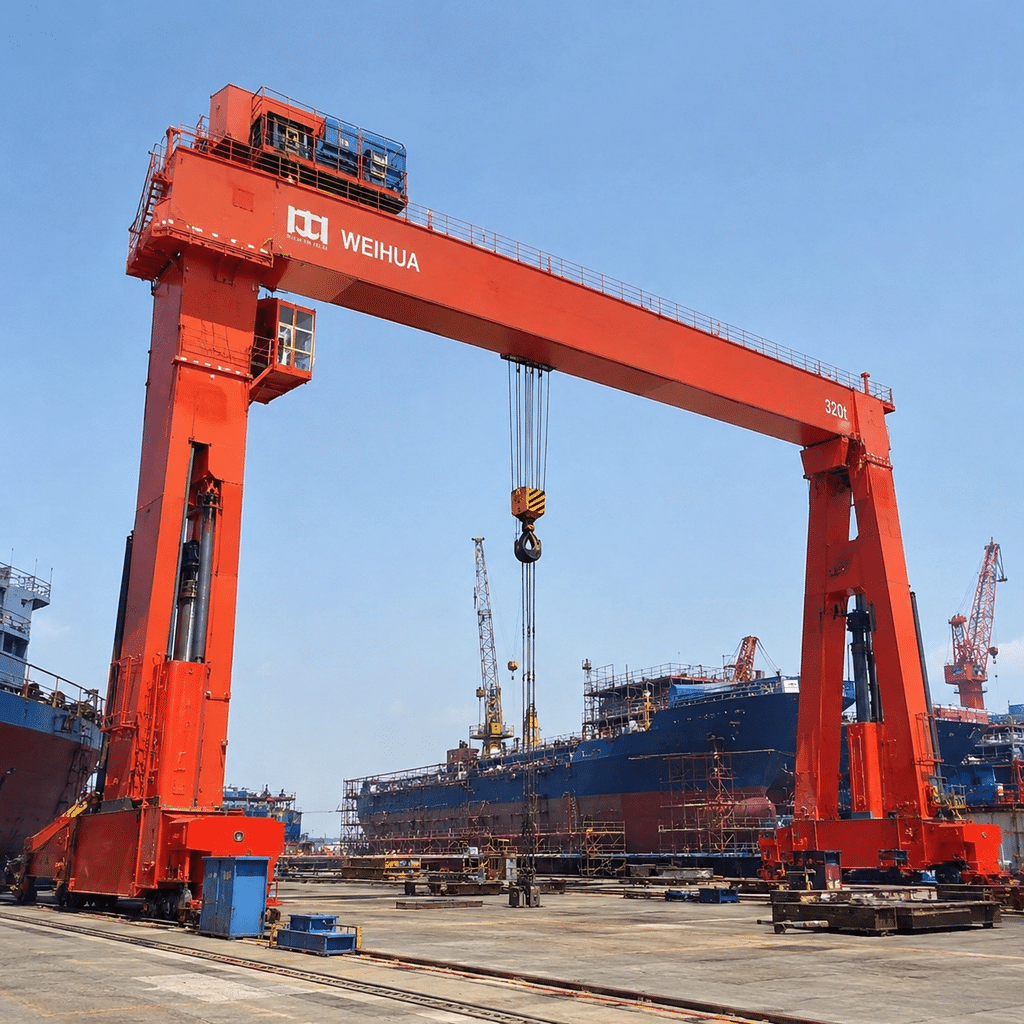
Hazard Zone Operation: Control Mode Selection (Radio Remote / Enclosed Cabin / Pendant Control)
- Radio remote control: Operators stay fully outside the hazardous zone. This removes exposure risk entirely, rather than relying on cabin shielding. This option works best for refinery tank farms.
- Enclosed operator cabin: Operators stay nearby for precise load positioning. Bear in mind the cabin interior and all built-in electric devices still need valid Ex certification. It suits lifting tasks inside turbine halls.
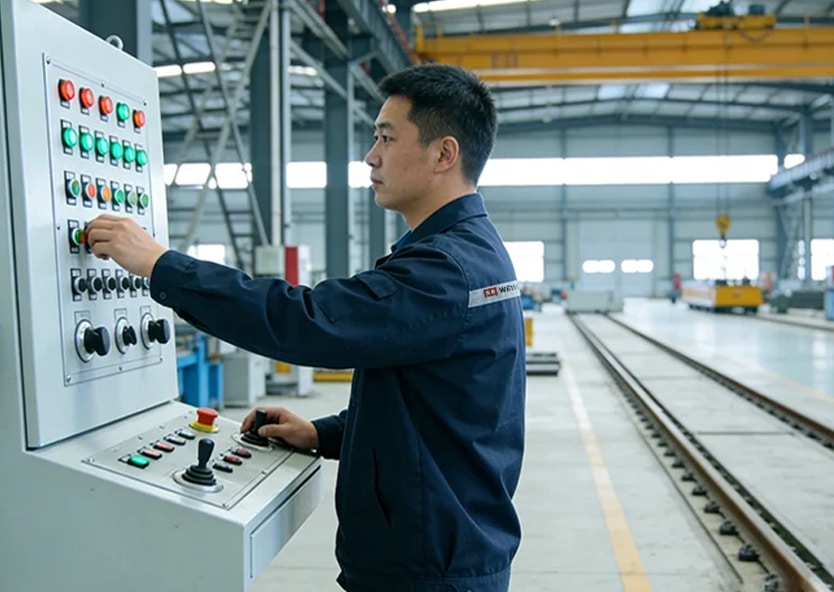
- Pendant control: Both the operator and control gear stay within the classified hazardous area. This method is only suitable for low-risk dust sites.
Frequently Asked Questions
1、Can an IIB crane handle hydrogen?
No. Hydrogen belongs to the IIC gas group, so IIC-rated equipment is required.
2、Is ATEX valid for Middle East projects?
Not always. Most local end users prefer IECEx and may reject ATEX-only certification. Confirm specs upfront.
3、Can I fit standard limit switches on an Ex crane?
No. Any non-certified electrical component invalidates the whole explosion-proof approval.
4、Is T4 better than T3?
Yes. T4 has a lower surface temperature limit and covers more flammable substances.
5、Are dust zones subject to the same Ex marking rules as gas zones?
No. Dust hazards follow separate standards and marking systems.