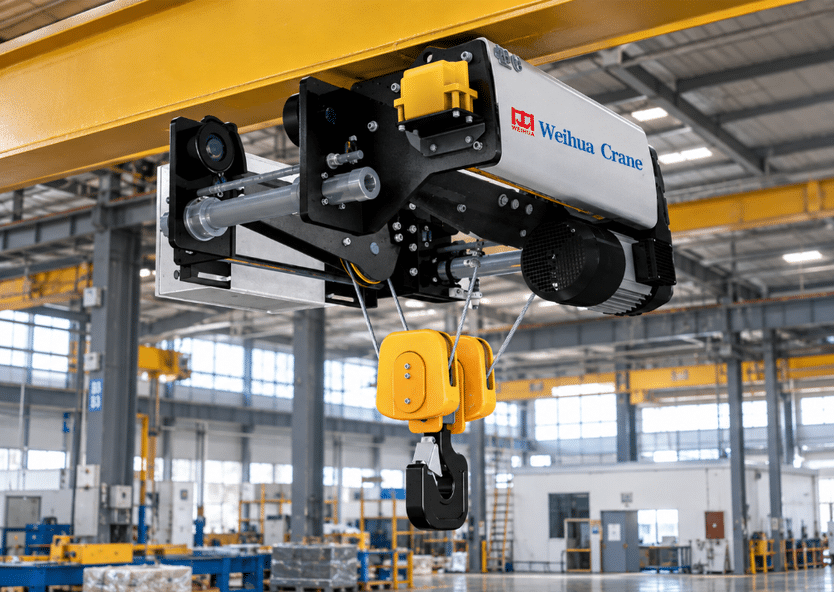
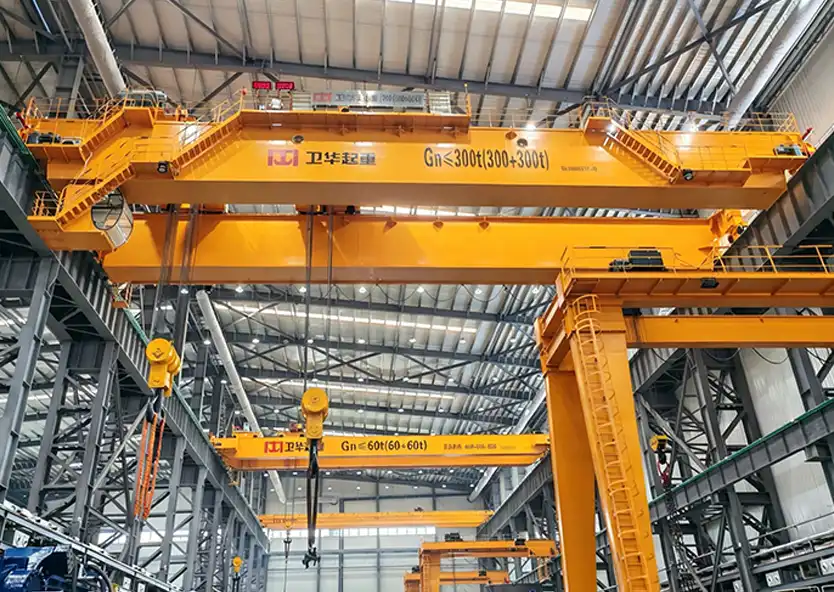
A 10-ton overhead crane gets a lot of use in many factories. Workers use it to move heavy pieces. It will not take up the floor area you hope to keep free. It carries machine parts, steel workpieces, and bulk production stock. This load level fits most ordinary shops. It can provide enough lifting force and will not make the whole machine too big.
But 10-ton overhead cranes are not made following the same design. Some have a single girder. Some others use a double-girder structure. Every unit can be different in physical size, lifting speed, and the kinds of working places it can enter.
If you plan to buy one, you may check its core data, build structure, and real working cases first. This can help you find one unit that fits your day-to-day production.
What Is a 10 Ton Overhead Crane?
This 10-ton model is one kind of bridge crane. Its rated lifting load is 10 tonnes. It runs on runway rails fixed at two sides of a workshop or industrial hall. The hoist and trolley move along the bridge beam. Workers can lift and carry materials across the whole working area.
Forklifts and other lifting equipment work on the ground. This crane hangs above the workshop floor. It can leave more space for machines, storage racks, and daily regular work.
You may choose a single-girder type or double-girder type. This choice follows your workshop layout and lifting tasks. Many points need to be considered: how often you lift goods, remaining headroom, required lifting height, and the type of material.
Main Types of 10 Ton Overhead Cranes
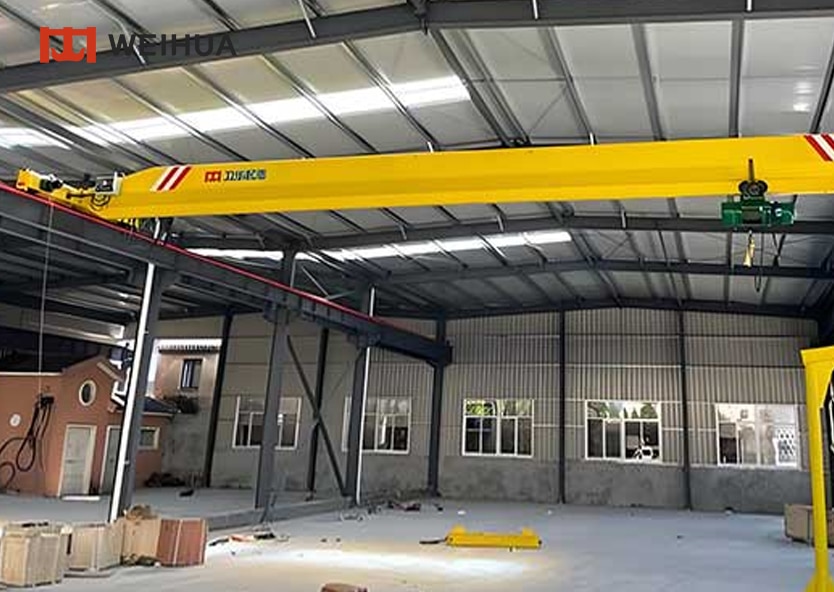
10 Ton Single Girder Overhead Crane
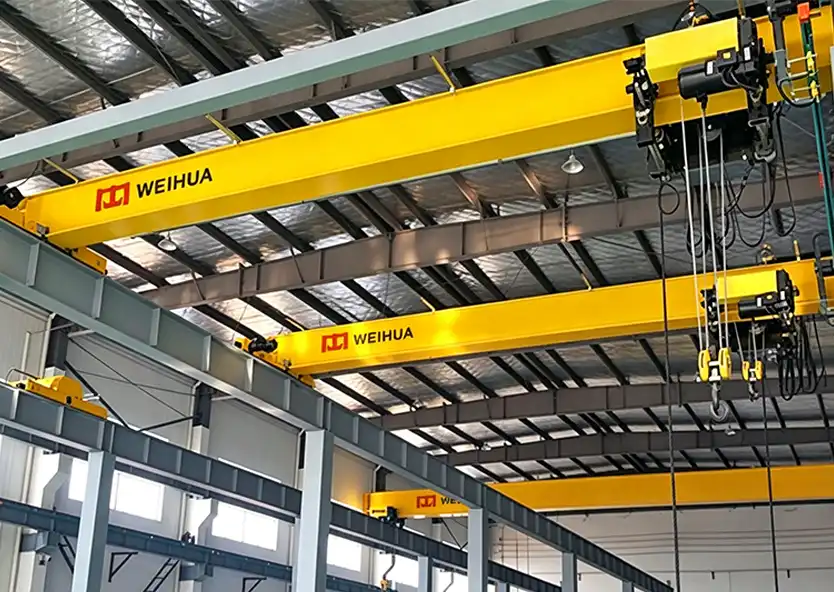
This crane uses one main beam to hold the trolley and hoist. The whole set stays compact. It suits workshops that do not want a heavy and big crane.
Many factories select it for general production, warehouse handling, and machine repair work. Its simple structure also reduces total weight and lowers the requirement for site installation.
If your ceiling space is not enough, you can pick the low-headroom version. It lets you get more lifting height.
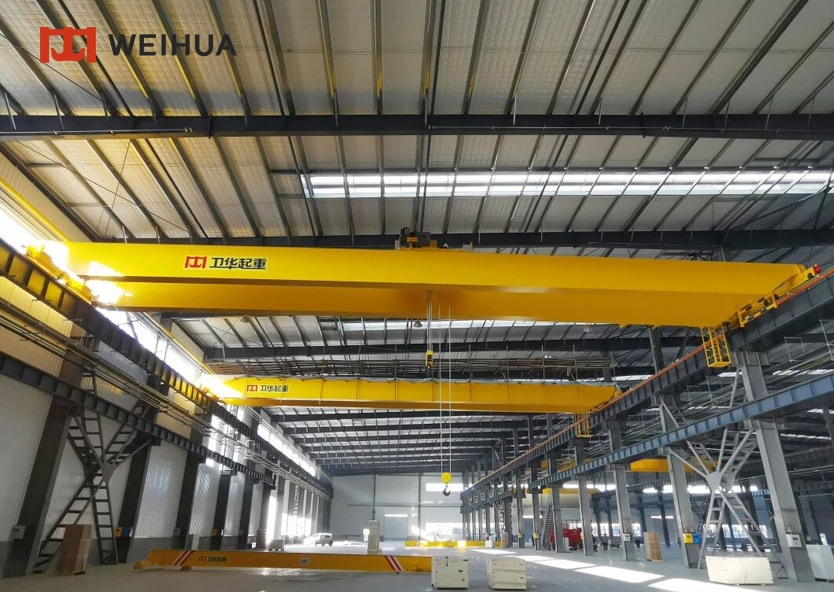
10 Ton Double Girder Overhead Crane
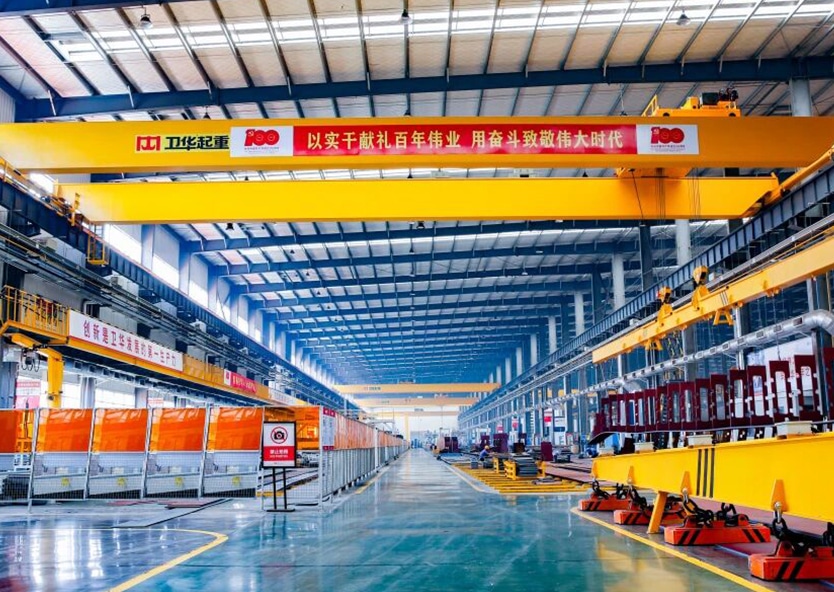
A double-girder overhead crane has two main beams. The trolley runs on rails, which are set on top of these beams or between them. The exact layout depends on the design you pick.
This structure can support more kinds of lifting work. You may install different hoist units and extra parts to meet your project needs.
People choose double girder cranes when their workshop has heavy work, large space, or hard lifting jobs.
No one design can fit all places. Look at your building condition, lifting frequency, and real work demand before you make the decision.
10 Ton Overhead Crane: Technical Specifications
Its parameters change according to building type and purpose of use. The numbers below are only reference data for the Weihua LH-10 low-headroom overhead crane.
| Parameter | Specification |
|---|---|
| Model | LH-10 |
| Rated Lifting Capacity | 10 t |
| Span | 10.5–31.5 m |
| Lifting Height | 6–24 m |
| Hoisting Speed | 0.7/7 m/min |
| Crane Travel Speed | 20–30 m/min |
| Trolley Travel Speed | 20 m/min |
| Working Class | M4 |
These numbers are not fixed standards for every 10-ton overhead crane. You can change the final configuration to match your workshop size and site conditions.
For example, the span you need is decided by the distance between runway rails. Lifting height must reach your highest lifting point. Travel speed should match your production flow.
You need to confirm the power supply and control methods when you draw the design. Different projects need different electrical setups.
Key Features of a 10 Ton Overhead Crane
Suitable for General Industrial Lifting
With a 10-ton rated load, this crane can handle many different industrial goods. Workers move steel bars, assembled machine parts, and equipment pieces with it, as long as loads do not go over its rated limit.
Whether it fits your site depends on load size, lifting hooks and rigs, and also the way you move these goods.
Makes Better Use of Floor Space
This crane moves in the air. It will not take up usable ground space, like forklifts and other wheel-based lifting tools.
This advantage is very helpful for workshops already filled with machines and production lines.
Flexible Structural Configurations
Single-girder and double-girder give you two main choices. You can also adjust span, lifting height, hoist layout, and control method when you place a custom order.
This flexibility makes it easier to put this crane into an old building or a new factory that is being built.
Different Control Options
Operators can control the crane by pendant buttons, wireless remote, or a fixed operator cabin.
Your choice depends on the working environment, sight range, moving distance, and operator habit. Remote control lets workers move more freely. Cabin control is better for some special working scenes.
Common Applications of 10 Ton Overhead Cranes
A 10 ton overhead crane can serve many different industries. Its usable scope changes with crane configuration and the loads you lift.
Machinery Manufacturing
Factories use these cranes to move machine frames, motors, steel pieces, and other heavy assemblies between workstations. They also use them when putting big equipment together.
Metal Processing Workshops
Steel plates, structural profiles, and welded parts often need transport between cutting, welding, and processing areas. A 10-ton crane can carry these loads, as long as they stay within its rated capacity.
Warehouses and Storage Facilities
Inside industrial warehouses, overhead cranes help load, unload, and move heavy stock. They can also carry parts between storage areas and nearby production lines.
Equipment Assembly Plants
Big equipment is made of many separate parts. Workers use this overhead crane to put these parts in the right position during assembly, and also for repair work later.
Automotive Parts Manufacturing
Factories that make auto parts often use this crane to move heavy molds, production machines, and welded metal sets. You need to select a crane setup that fits the weight and movement of each load.
How to Choose the Right 10 Ton Overhead Crane
If you want to send a quote request, collect some simple site information first.
First, check the real weight of goods you plan to lift. Do not let this 10-ton crane work with overload every day. Any lifting rig you add will bring extra weight, and this weight must count into the total load.
Then measure your workshop space. Span, runway length, lifting height, and spare overhead space will decide how to build this crane.
How often you lift goods is also important. A crane only used sometimes for maintenance will not work the same as one moving parts every shift.
Lastly, check the place you will install it. Indoor unit and outdoor unit need different protective shells. Talk with the manufacturer about temperature, floating dust, wet air, and other site problems.
Frequently Asked Questions
1. What is the maximum lifting capacity of a 10 ton overhead crane?
Its rated lifting load is 10 tonnes. You cannot lift goods heavier than this number. Remember to add the weight of lifting attachments into your calculation.
2. What is the difference between single-girder and double-girder 10 ton overhead cranes?
A single-girder crane uses one main bridge beam, and a double-girder crane has two. They are different in structure, headroom requirement and optional equipment. Your use case and workshop conditions tell you which one is better.
3. What span is available for a 10 ton overhead crane?
Available span changes with crane model and building layout. For one example, Weihua’s LH-10 low-headroom overhead crane has reference span from 10.5–31.5 m.
4. What lifting height does a 10 ton overhead crane offer?
It is different for each model and custom plan. The reference Weihua LH-10 model can reach a lifting height of 6–24 m. Other configurations have different ranges.
5. Can a 10 ton overhead crane be operated by remote control?
Yes. Wireless remote control is an optional function for qualified crane setups. Pendant and cabin control are also available to meet operational demands.
6. What information should I provide when ordering a 10 ton overhead crane?
Prepare rated capacity, span, lifting height, runway length, workshop drawings, and power supply information. You also need to tell them what material you lift, how often you run the crane, and the installation location. All this information helps the manufacturer recommend a suitable crane configuration.